Dervla Murphy
1931–2022
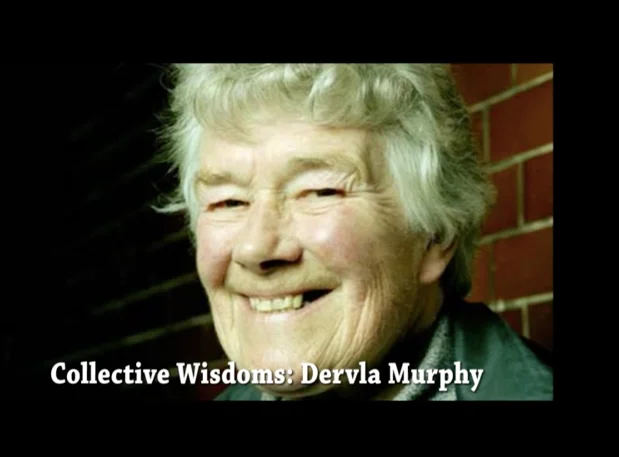
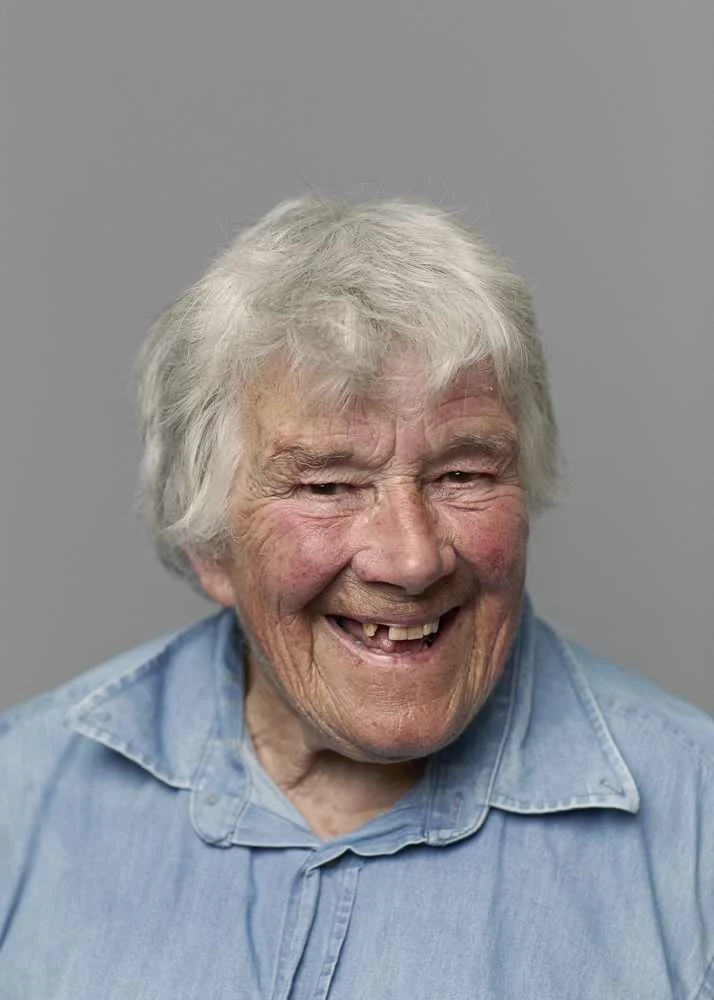
Celebrating and remembering the life-force that was Dervla Murphy, who has died at home at the age of 90. Thank you for your friendship, your principled wisdom, your questing conversation and your unflinching books. 22nd May 2022
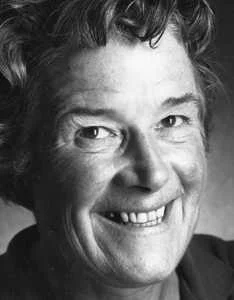
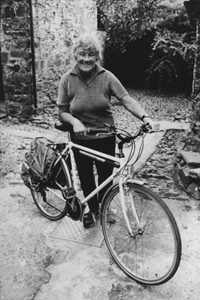
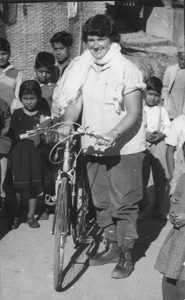
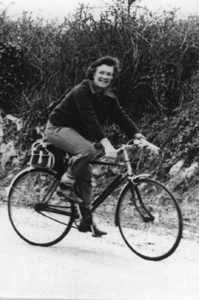
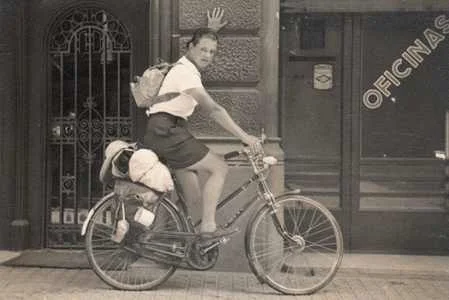
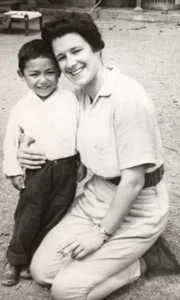
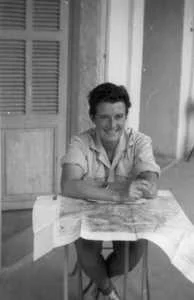
Dervla Murphy was born on 28 November 1931 of parents whose families were both settled in Dublin as far back as can be traced. Her grandfather and most of his family were involved in the Irish Republican movement. Her father was appointed Waterford County Librarian in 1930 after three years internment in Wormwood Scrubs prison and seven years at the Sorbonne. Her mother was invalided by arthritis when Dervla was one year old. She was educated at the Ursuline Convent in Waterford until she was fourteen, when, because of the wartime shortage of servants, she left to keep house for her father and to nurse her mother. Dervla did this for sixteen years with occasional breaks bicycling on the Continent. Her mother’s death left her free to go farther afield and in 1963 she cycled to India. There she worked with Tibetan refugee children before returning home after a year to write her first two books.
Dervla Murphy’s first book, Full Tilt: Ireland to India with a Bicycle, was published in 1965. Over 20 other titles have followed. Dervla has won worldwide praise for her writing and has been described as a ‘travel legend’ and ‘the first lady of Irish cycling’. Now in her 80s, she continues to travel around the world and remains passionate about politics, conservation, bicycling and beer. Dervla is now published by Eland.
ARTICLES, STORIES & OTHER NEWS
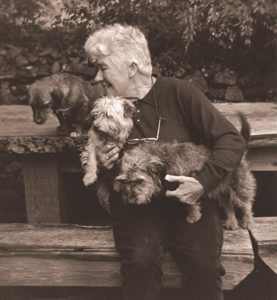
"Weeds," says Dervla Murphy in her deep, melodious voice, in what sounds like a mixture of mild irritation but also delight at the carpet of forget-me-nots covering the courtyard of the Old Market. This collection of stone buildings hidden away behind iron gates up a cobbled laneway in Lismore, County Waterford, is the home of the legendary Irish travel writer.
In 1977, in her astonishing account of a winter spent with her six year old daughter in the sub-zero Indus Valley in Baltistan, Dervla Murphy declared that she had ‘no head for politics’. In ‘A Month By the Sea: Encounters in Gaza’, her no less astonishing new book, it is abundantly clear that much has changed on that front in the ensuing 35 years, and readers of Dervla’s recent books may rather suspect that her claim made in Baltistan may well have been a case of modesty over accuracy.
On a cold grey day at the end of March 1964, shortly after my return from India, I first met a Tibetan in Western surroundings – the foyer of a central London hotel. I had been working for some months in Dharamsala, then an overcrowded and under-funded refugee camp for Tibetan children, and that moving encounter with the Tibetan way of being made me feel slightly apprehensive about Lobsang. How would this young man, only five years out of Tibet and three months out of India, be reacting to our Western ways?
My daily routine starts at five. I have a big breakfast and, depending on the season, I take the dogs out. In the summer I swim in the river. I spend the day writing. I go to bed early, about 9.30pm or so. I don’t pace myself to have a set word count. When I’m between books, I love to have friends to stay in my home. That, for me, is a holiday . . .
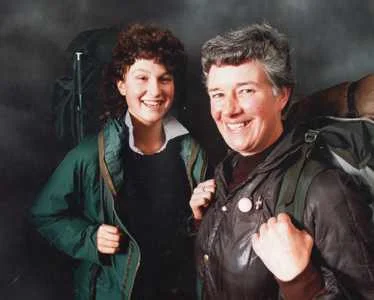
I vividly remember my first meeting with Dervla Murphy in 1979. Husband George and I had just arrived at a hostal in Otavalo, Ecuador, while researching our guide to Backpacking in Venezuela, Colombia and Ecuador. I emerged from our room to find George chatting to a tough-looking woman with an Irish accent. She was telling him where to buy good yoghurt . . .
If I am to be remembered, I’d like to be remembered as someone who was interested in the ordinary people of whatever country I was in . . .
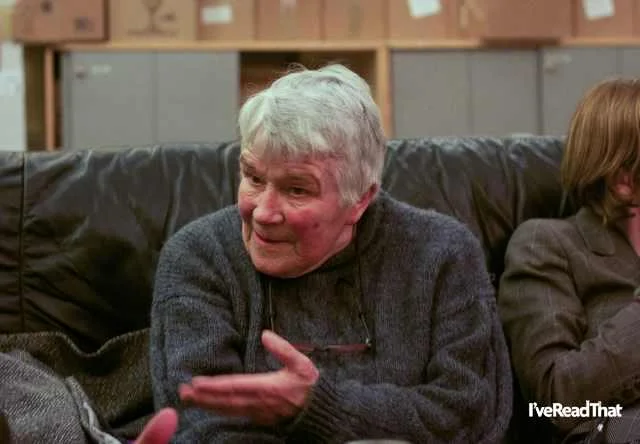
Dervla Murphy rarely gives interviews. She is one of our most senior and prolific travel writers – more than 20 books in a half-a-century career – but she is extremely publicity-shy, from an age before blog and spin were part of a writer’s toolkit. She’s not a J D Salinger – there’s the odd public sighting or visit to an Irish bar – but this was her first interview for many years . . .
'Murphy is adept at getting under the skin of a nation, rarely happier than when eating local food and drinking beer in the kitchens of the people she meets en route. She is honest and determined, but never sentimental about the sometimes desperate situations she experiences and the lives she touches.'
At 10 years old, Dervla Muphy planned her first major odyssey: a cycling trip to India. Now 78, the seasoned travel writer still drinks beer from a tin, has been known to run naked around her garden, and hasn’t given up travelling – even when she’s at home in Waterford . . .
Many people have stayed with Dervla, or been host to her, during the 48 years that she’s been a writer, and any who visited her during the winter will remember the challenge of keeping warm (“I wonder if it would be possible to have a bath?” I asked on my first visit. “The river’s down there” she responded. It was while bathing in the same river some years later that a frisky bull charged her and broke some ribs – or possibly her back, I can’t now remember) . . .
“Dervla Murphy is that rare traveller who can make the world seem both wider and more intimate.”
Books
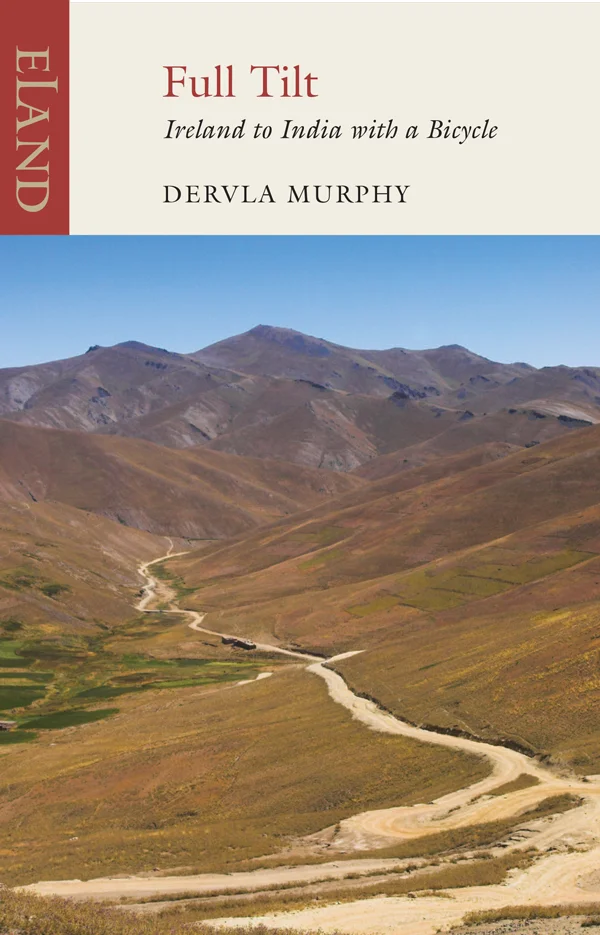
When Dervla Murphy was ten, she was given a bicycle and an atlas, and within days she was secretly planning a trip to India. At the age of thirty-one, in 1963, she finally set off and this book is based on the daily diary she kept while riding through Persia, Afghanistan and over the Himalayas to Pakistan and India. A lone woman on a bicycle (with a revolver in her trouser pocket) was an almost unknown occurrence and a focus of enormous interest wherever she went. Undaunted by snow in alarming quantities, and using her .25 pistol on starving wolves in Bulgaria and to scare lecherous Kurds in Persia, her resourcefulness and the blind eye she turned to personal danger and extreme discomfort were remarkable
‘Continuously entertaining ... continuously astonishing.’ - Sunday Telegraph
‘She avoided wolves, floods, robbery, had three ribs broken in a brawl in an Afghan bus... suffered extremes of heat and cold, ate everything, liked almost everybody.’ - Homes and Gardens
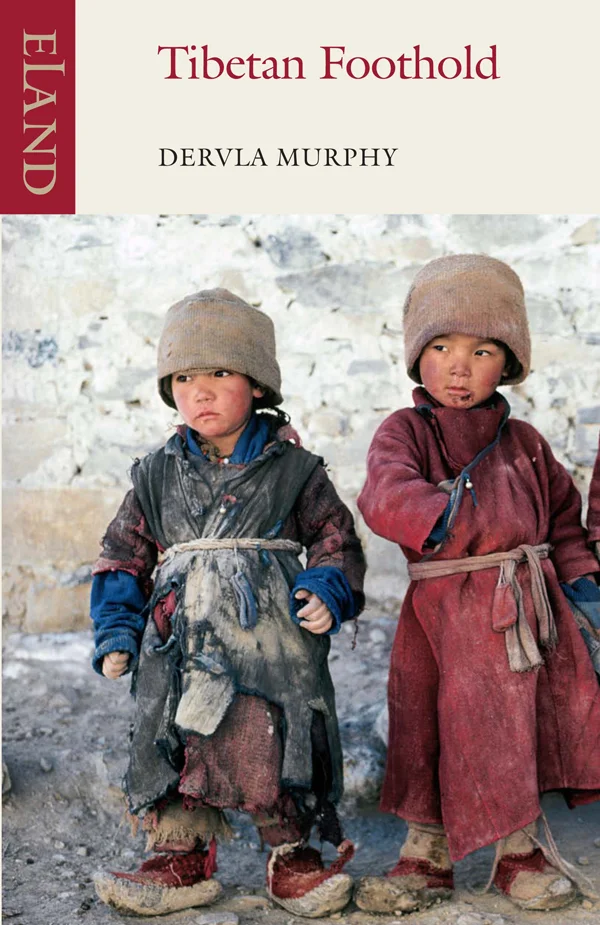
After her epic journey from Ireland to India in 1963, Dervla Murphy immersed herself in the life of the subcontinent, working for six months in an orphanage for Tibetan children in Northern India. She fell in love with the ‘Tiblets’ – the cheerful, uncomplaining, independent and affectionate children of the new Tibet-in-exile – but she also managed to explore India’s Tibetan frontier, leaving the reader panting in her wake. Tibetan Foothold not only confirmed Dervla’s status as a traveller, but also revealed her to be a truly independent voice and an acute observer of politics and society.
‘Humour and sturdiness are only the half of it: Dervla Murphy is that rare traveller who can make the world seem both wider and more intimate.’ - Observer
‘This is a moving – at times even harrowing – story. But it is leavened by the writer’s irrepressible zest for life, her warm humanity, her courage and good humour.’ - Irish Independent
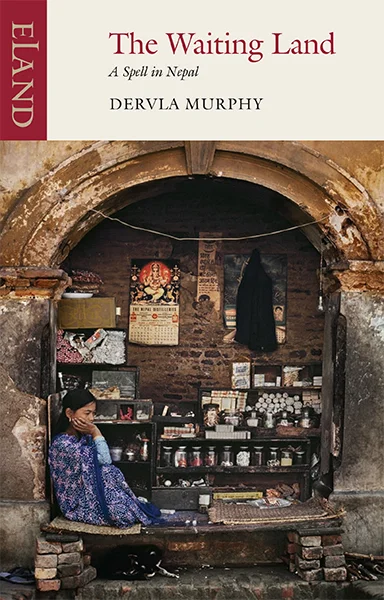
The Waiting Land is the third in a series of books tracing Dervla’s involvement with the self-sufficient mountain cultures of the Himalayas. Lured by the chance to work again with refugees (a group of five hundred Tibetans lodged in tents in the remote Pokhara valley), Dervla settles down to live in a tiny, vermin-infested room above a stall in a bazaar. Here she falls under the spell of the ancient land of Nepal, poised between East and West, between China and India, between Buddhism and Hinduism, yet true to its own distinct civilization. Dervla’s understanding of the roots of the Nepalese past, and her own stamina, culminate in an epic trek into the remote Langtang region on the border with Tibet.
‘She revels in bizarre experiences and strange encounters in a land where the only thing certain is that the unpredictable always happens.’ - Irish Independent
‘Dashing in her insight, beautifully responsive to environment, supportive to peopleof most sorts, sometimes exceedingly funny.’ - TLS
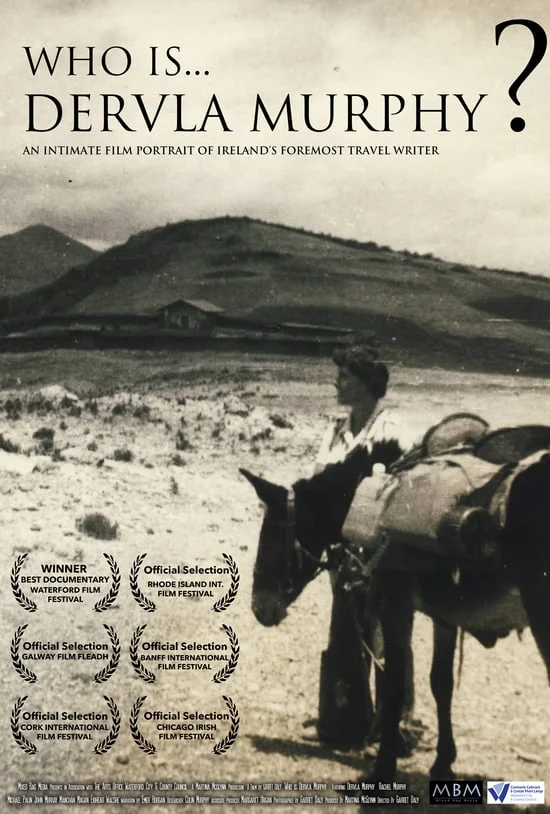
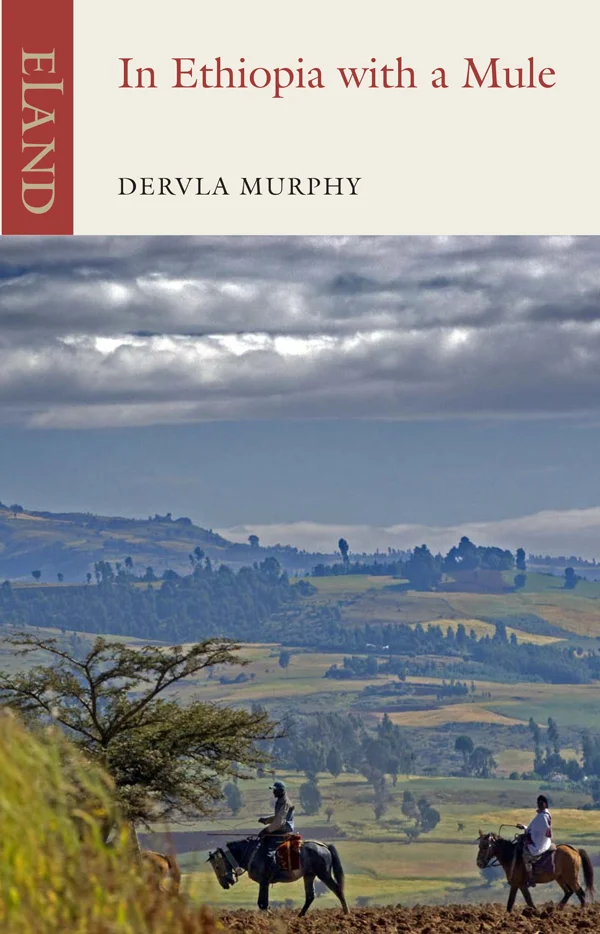
Inspired by childhood stories of Prester John and the Queen of Sheba, in 1966 Dervla Murphy bought Jock, an amiable pack-mule in order to treck across the highlands of this awesome, but troubled land. She wandered south from the Red Sea shore to Sheba’s Aksum, and upto the icy roof of Africa, the Semien mountains. From there she descended to the ruined palaces of Gondar and skirted the northern shore of Lake Tana before crossing the drought-afflicted high ranges to Lalibela. Having exchanged the exhausted Jock (named after her publisher) for an un-cooperative donkey, Dervla completed her journey to Addis Ababa. Her real achievement, was not surviving three armed robberies or a thousand mile trail but rather the growing affection and understanding of another race.
‘One of the supreme virtues of Miss Murphy as a travel writer – she is human. She needs her drink; she craves her cigarettes; she is capable of losing her temper; she smuggles things through customs. A more virtuous figure would be far less endearing’ - Daily Telegraph
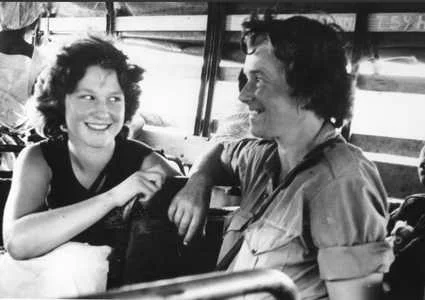
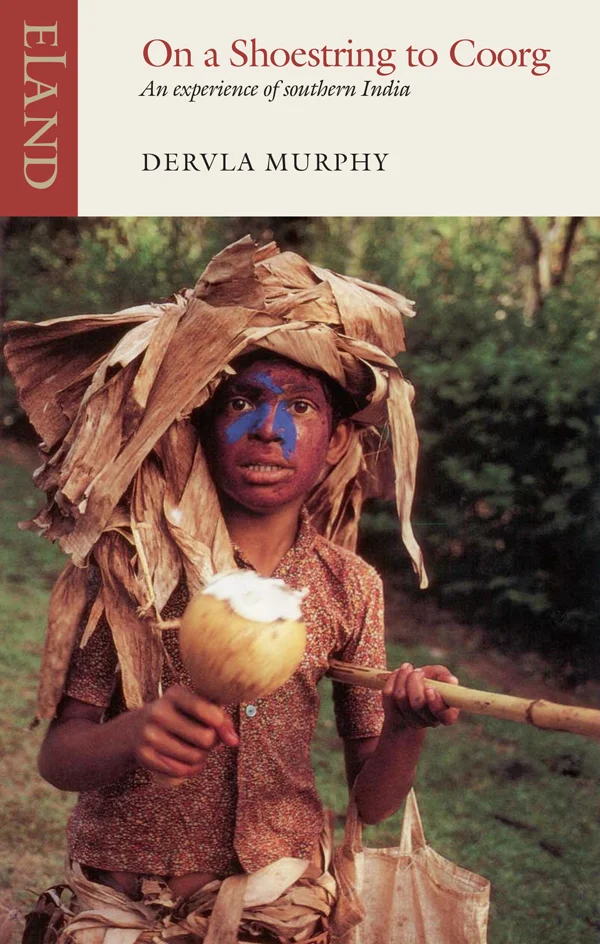
Dervla Murphy and her daughter Rachel – with little money, no taste for luxury and few concrete plans – meander their way slowly south from Bombay to the southernmost point of India, Cape Comorin. Interested in everything they see, but only truly enchanted by people, they stay in fishermen’s huts and no-star hotels, travelling in packed-out buses, on foot and by local boats.
Instead of pressing ever onwards, like so many travellers, they double back to the place they liked most, the hill province of Coorg and settle down to live there for two months. Dervla Murphy creates an extraordinarily affectionate portrait of these cardamon-scented, spiritually and agriculturally self-sufficient Highlands.
‘A travel writer of rare quality and freshness.’ - The Observer
‘Murphy spans the wide range of sensation of India, where moments of great happiness come hard upon frustration and stench.’- The Guardian
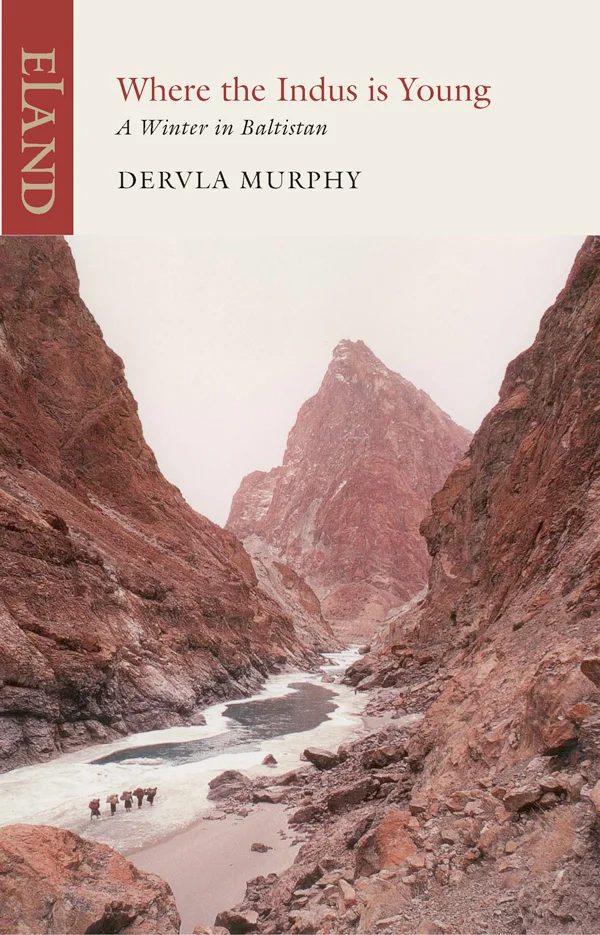
In Where the Indus is Young, Dervla Murphy’s indomitable will is matched by that of four-footed Hallam and her six-year-old daughter Rachel. Together they make a mockery of fear, trekking through the awe-inspiring Karakorum mountains not only in the heart of winter, but close to Pakistan’s disputed border with Kashmir. They work their way up beside the perilous gorge carved through the mountains by the Indus, lodging with locals and eating, sleeping and bargaining with the Balts, who farm one of the remotest regions on earth.
Despite the hardship, Dervla never forgets the point of travel, re- taining enthusiasm for her magnificent surroundings and using her sense of humour to bring out the best in her hosts, who are often locked into the melancholic mood of mid-winter.
‘...the most appallingly fascinating travel book that I have ever read.’ - Jan Morris, The Times
‘... the lasting impression left by this book is one of sheer joy.’ - Colin Thubron, Sunday Telegraph
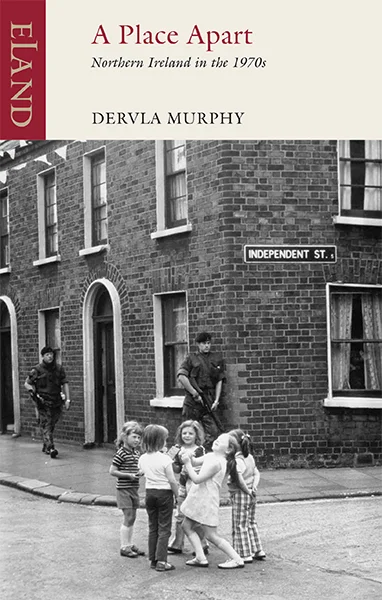
At the height of The Troubles, Dervla Murphy bicycled to Northern Ireland to try to understand the situation by speaking to people on either side of the divide.
Despite her own family connections to the IRA, she travelled north largely unfettered by sectarian loyalties. Armed instead with an indefatigable curiosity, a fine ear for anecdote, an ability to stand her own at the bar and a penetrating intelligence, she navigated her way through horrifying situations, and sometimes found herself among people stiff with hate and grief. But equally, she discovered an unquenchable thirst for life and peace, a spirit that refused to die.
‘Genial, tolerant and affectionate. It seems incredible that such a foul oyster should produce such a pearl.’ - The Times
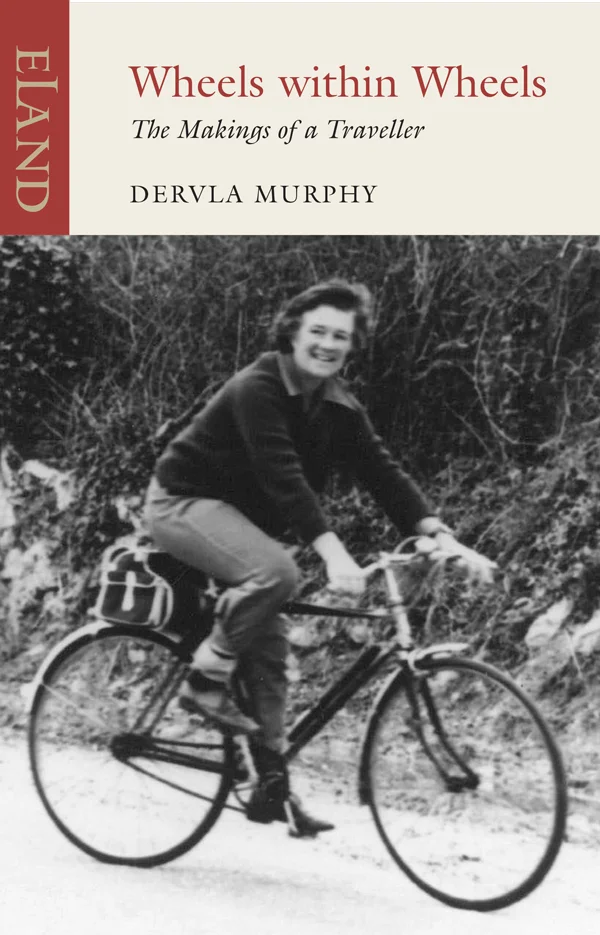
What is it that makes us who we are? In this beautifully written and searingly honest autobiography, the intrepid cyclist and traveller Dervla Murphy remembers her richly unconventional first thirty years. She describes her determined childhood self – strong-willed and beguiled by books from the first – her intermittent formal education and the intense relationship of an only child with her parents, particularly her invalid mother whom she nursed until her death.
Here lie the roots of Dervla’s gift for friendship, her love of writing, her curiosity, her hatred of cant, her hardiness and her desire to travel. Bicycling fifty miles in a day at the age of eleven, alone, it seems only natural that her first major journey should have been to cycle to India.
‘An extraordinary book, reflecting an extraordinary woman and one of the great travellers of our time.’ - William Trevor, The Times
‘A giant of travel writing.’ - Matthew Parris, BBC Radio 4
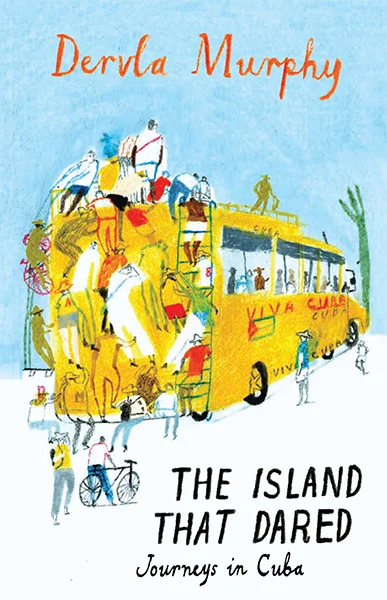
Take a three-generation family holiday in Cuba in the company of Dervla Murphy, her daughter and three young granddaughters and you have a ‘Swallows and Amazons’ adventure in the Caribbean. They trek into the hills and along the coast, camping out on empty beaches beneath the stars and relishing the ubiquitous Cuban hospitality. But this is just the start of a fully-fledged quest to understand the unique society created by the Cuban Revolution. For Dervla later returns alone to investigate the experience of modern Cuba with her particular, candid curiosity and creates a complex picture of a people struggling to retain their identity in the face of insistent hostility from America.
‘Fierce, highly moral and uncompromising, this is classic Murphy. In an often anodyne world, she remains an original...she is a refreshingly defiant voice, straight-talking and no-nonsense.’ - Justin Marozzi, The Financial Times
‘Dervla Murphy’s travelogue is a close as any foreigner is likely to get to the life of Cubans on the brink.’ - Stephen Smith, Daily Telegraph
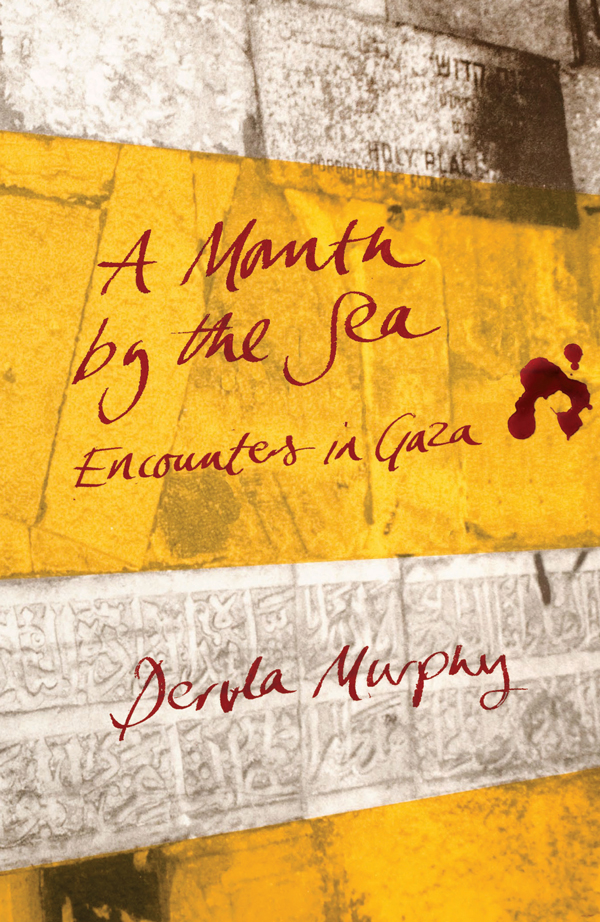
Over the summer of 2011, in her eightieth year, Dervla Murphy spent a month in the Gaza Strip. She met liberals and Islamists, Hamas and Fatah supporters, rich and poor. Used to western reporters dashing in and out of the Strip in times of crisis, the people she met were touched by her genuine, unflinching interest and opened their hearts to her. What she finds are a people who, far from the story we are so often fed, overwhelmingly long for peace and an end to the violence that has so grossly distorted their lives. The impression we take away from the book is of a people whose real, complex, nuanced voice has never been heard before.
‘Her book is a kind of wake-up call to the world.’ - Colm Tóibín
‘A Month By the Sea is a restless antidote to the easy road of indifference ... a fist-clenched polemic, an octogenarian waving magnificently, not drowning.’- TLS
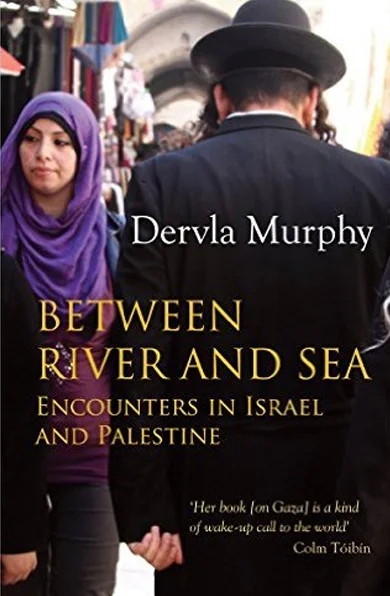
Dervla Murphy describes with passionate honesty the experience of her most recent journeys into Israel and Palestine. In cramped Haifa high-rises, in homes in the settlements and in a refugee camp on the West Bank, she talks with whomever she meets, trying to understand them and their attitudes with her customary curiosity, her acute ear and mind, her empathy, her openness to the experience and her moral seriousness. Behind the book lies a desire to communicate the reality of life on the ground, and to puzzle out for herself what might be done to alleviate the suffering of all who wish to share this land and to make peace in the region a possibility.
'‘There are no no-go areas for the wonderfully intrepid Dervla Murphy.’ - Donald Macintyre, Independent