
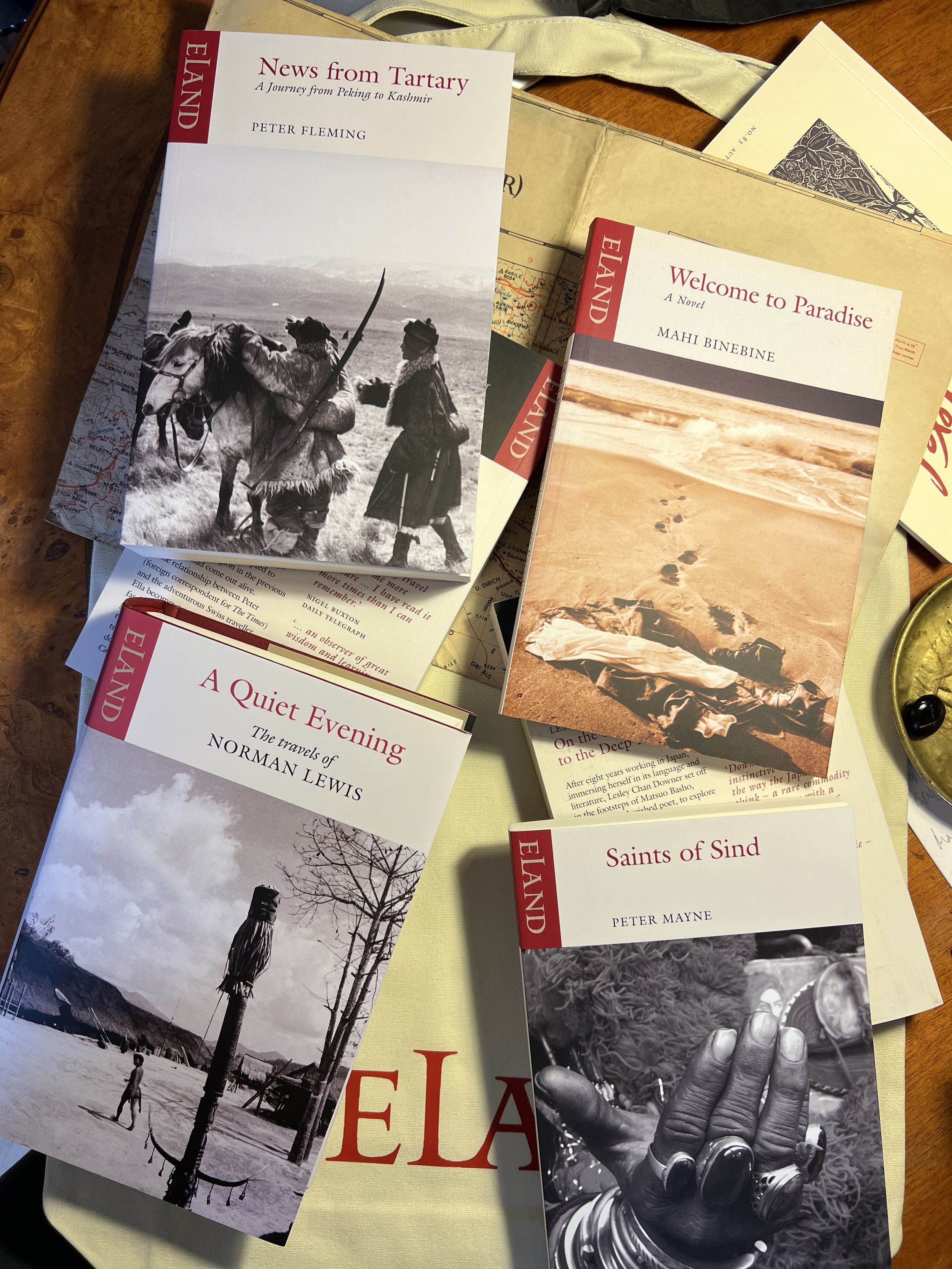
The Eland subscription was an idea sold to us by a customer. For a flat fee we send you all our new titles, as they come hot from the printers, posted at the same time as review copies go to the press. If you purchase the 2026 subscription, we will send you John Hatt’s selection of the best of Norman Lewis’s articles, A Quiet Evening and Mahi Binebine’s Welcome to Paradise. In late March these will be joined by Peter Fleming’s News from Tartary and Peter Mayne’s Saints of Sind plus two more titles in the autumn.

You know they like reading. You know they love travelling. But you cannot quite remember which books they have already read, or know where they plan to go off to next? So whether it is a thank you present, or to mark a birthday, or to just salute the shared interests of old friendships we have created Eland Book Tokens. Like all our innovative marketing ploys, this came to us through regular customers telling us what they would like from us.
So first of all you pay, then we send an Eland Book Token letter folded into a Eland card (with a gift message if you want) all tucked into a printed Eland catalogue asking them to help themselves to two books. As you probably already know, there are now over 175 Eland titles to choose from. Ignoring the prices, they send us their chosen list (either by postcard or by e-mail) and we post them direct from our office.
At the moment we are ignoring the individual book prices but keeping it to just a single UK postal address.
You know they like reading. You know they love travelling. But you cannot quite remember which books they have already read, or know where they plan to go off to next? So whether it is a thank you present, or to mark a birthday, or to just salute the shared interests of old friendships we have created Eland Book Tokens. Like all our innovative marketing ploys, this came to us through regular customers telling us what they would like from us.
So first of all you pay, then we send an Eland Book Token letter folded into a Eland card (with a gift message if you want) all tucked into a printed Eland catalogue asking them to help themselves to four books. As you probably already know, there are now over 175 Eland titles to choose from. Ignoring the prices, they send us their chosen list (either by postcard or by e-mail) and we post them direct from our office.
At the moment we are ignoring the individual book prices but keeping it to just a single UK postal address.

‘Sail away from the safe harbour.
Catch the trade winds in your sails.
Explore. Dream. Discover.’
Mark Twain
Due to customer demand we have produced a new Eland bag for you to explore, dream and discover with.
Eland limited edition (100 bags) double sided Tote bag, 16 inch deep, 14 inch wide
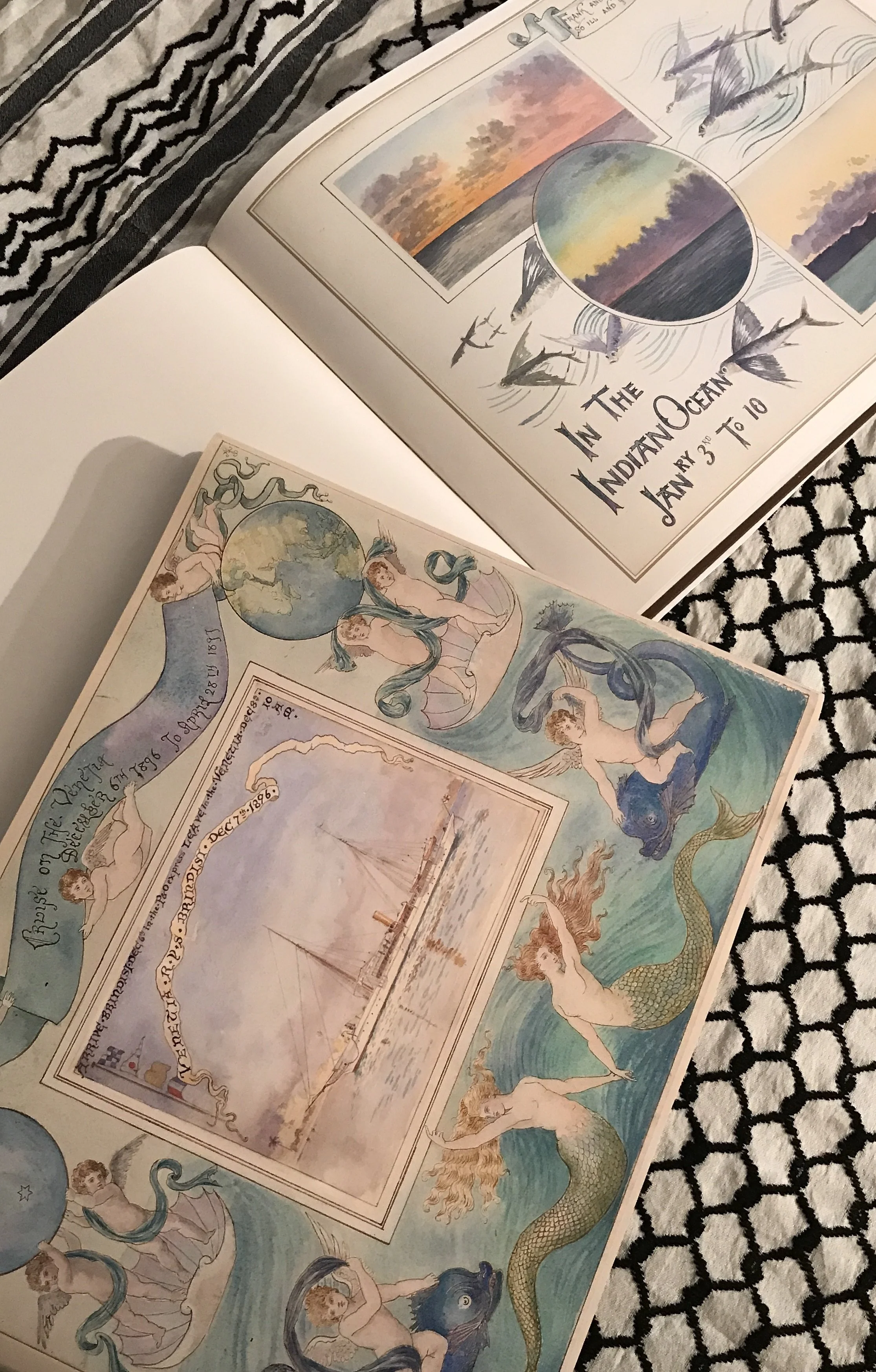
From the Introduction by Rose Baring
This beautiful album of watercolours, created during a five-month cruise to the Far East in the winter of 1896–7 on her husband’s steam yacht, is the fullest expression of the talents of my great grandmother, Mabel Ashburton.
***
So these pages and the magical glimpse they give us of the era of the steam yacht are all that remain of the Venetia. Mabel’s grandson, my father, made a private press edition of 200 copies of the album to celebrate his 90th birthday in 2018, giving them away to family and friends as a reverse birthday present. The remaining copies are now for sale to anyone who wishes to experience late Victorian travel and the world at that time from the comfort of their armchair.

At the heart of the Middle East, with its regional conflicts and proxy wars, is a 1400-year-old schism between Sunni and Shia. To understand this divide and its modern resonances, we need to revisit its origins: to become familiar with ‘The House’ of Prophet Muhammad, the accidental coup after his death that set aside the claims of his son Ali, and the slaughter of Ali’s son Husayn at Kerbala. These events, known to every Muslim, continue to influence Middle East politics. The House Divided follows these narratives through the first caliphates and the medieval empires forged by Arabs, Persians and Turks, to the contemporary Middle East. It shows how a dynamic range of identities – fuelled as much by ethnic, dynastic and national rivalries as by religious differences – have shaped the region. In 1979 this already complex world was jolted by the seismic shift of three revolutions – in Iran, Mecca and Afghanistan – whose effects are still being played out. Rogerson’s original and intimate approach takes the modern chessboard of nation states and looks at each through its particular perspective.
‘A tour de force. One of the best summary histories of Islam from its beginnings until today I have come across. Informative, engaging, and excitingly written, it is essential reading for anyone who wants to understand the origins and development of a great world religion’ Ghada Karmi, author, In Search of Fatima

Eland’s Poetry of Place series captures the essence of a city, region or country in poetry. Each volume fits easily in a pocket, to be whipped out to fill moments of longeur on the metro or on a vaporetto, or a wait at a shady table. For £25 you can choose five volumes from this series, or let us send you a selection. If you would like to make your own choice, please list the books you would like in the gift section of your order. The full series includes: Andalus, Arabia, Berber Odes, China, Desert Air, Dublin, England, Highlands & Islands, Istanbul, The Isles of Greece, London, Paris, Rome, Tuscany & Umbria, The Ruins of Time and Venice.
‘these little books are essential pocket-fillers for any distraction-seeking daydreaming traveller.’ Jessica Ablitt Sudbury, Time Out
‘Having just stumbled upon a new volume called Dublin: Poetry of Place … I need to return to the idea of using poetry as a travel guide ... All of us owe it to our city to slip a copy of this slim volume into the backpack of the next visitor we send wandering the streets of our nation’s capital.’ Manchan Magan, The Irish Times
‘perfect stocking fillers.’ Michael Kerr, The Daily Telegraph

On Travel presents a pyrotechnic display of cracking one-liners, cynical wordplay and comic observation, mining three thousand years of global wit and wisdom: from Pliny to Spinoza and from Albert Einstein to Aunt Augusta. Beyond the mad diversity of opinions and ideas, there is a gradually emerging consensus: that other people are crucial to our understanding of ourselves and that there is more than one right way to be.
It also offers occasional practical tips to make the most of your trip, ranging from advice on choosing your companions to the importance of tethering your camel. And it proves that travel – far from being an indulgent escape – is real preparation for the journey through life.
‘I met a lot of people in Europe. I even encountered myself.’ James Baldwin
I love quotations because it is a joy to find thoughts one might have, beautifully expressed with much authority by someone recognised as wiser than oneself.’ Marlene Dietrich
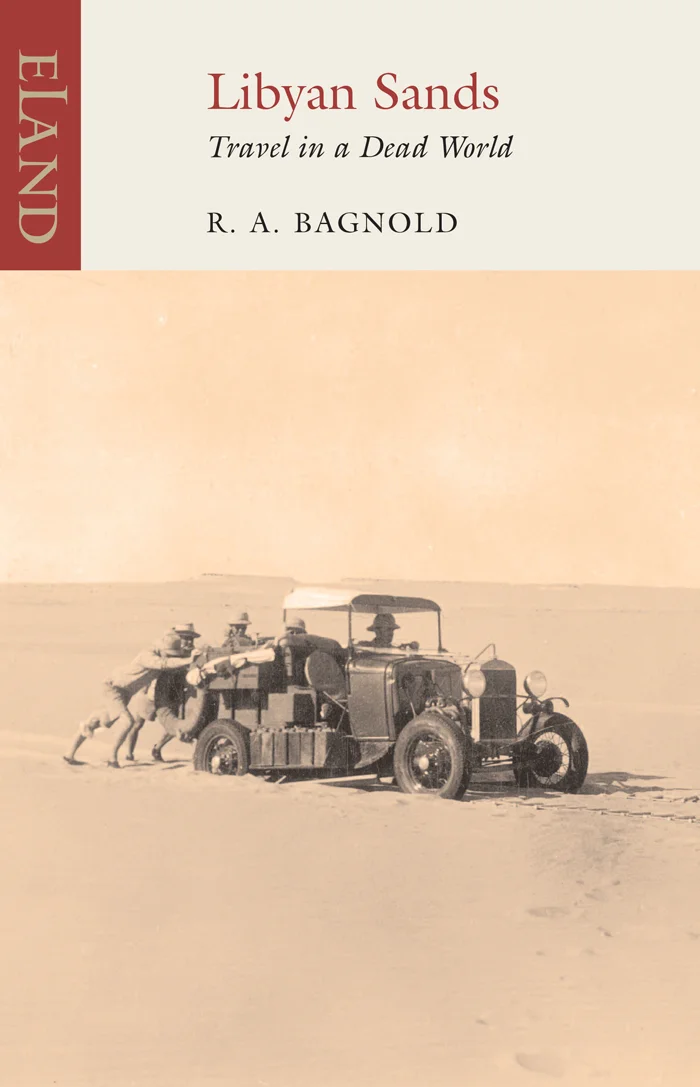
In the 1920s and 30s, a band of British officers stationed in Egypt began to explore the Western Desert which straddles the borders with Libya and the Sudan. Adapting a series of Model T Fords, Bagnold and his colleagues set out across territory hitherto traversed only by camel caravans. They mapped new routes across ‘impassable’ sand seas, in ‘regions untrodden by man since the Stone Age’. They also uncovered inner strengths, an awed respect for the stern and beautiful environment and a tender relationship with the machines upon which their lives depended. Their knowledge went on to play a crucial part in the North African campaign during the Second World War. For these men formed the nucleus of the celebrated LRDG, the Long Range Desert Group. It is the quiet heroism of such men that is celebrated in Michael Ondaatje’s triumphant novel, The English Patient.
‘Libyan Sands is, without question, the classic work of 20th-century Saharan exploration.’ - Eamonn Gearon, Geographical
‘Ralph Bagnold: the pioneer who made a romance of navigating the deep Sahara by car.’ - John Wright
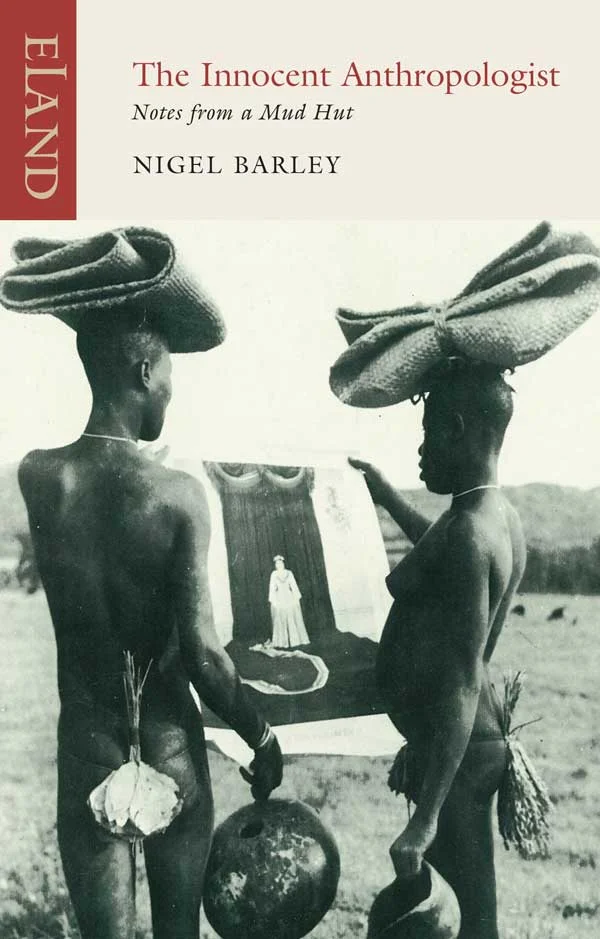
Studying a little-known tribe in the Cameroons was the author’s first experience in fieldwork – and very nearly his last. Nigel Barley set up home in a mud hut in order to study the customs and beliefs of the Dowayo people. He knew how fieldwork should be conducted, but, as he rapidly discovered, the theory did not take into account the elusive nature of Dowayo society, which refused to conform to the rules.
In this honest, funny and compulsive account of his first year in Africa, Dr Barley – who survived boredom, disaster, illness and hostility – gives a wonderfully irreverent introduction to the life of a social anthropologist which nevertheless makes inspired reading.
‘A riotously funny book which actually had me laughing out loud.’ - Gerald Durrell, Mail on Sunday
‘He does for anthropology what Gerald Durrell did for animal collecting . . . The Innocent Anthropologist is a truly remarkable book.’ - Daily Telegraph

When local contacts tipped off Nigel Barley that the Dowayo circumcision ceremony was about to take place, he immediately left London for the village in northern Cameroon where he had lived as a field anthropologist for 18 months.
The Dowayos are a mountain people that perform their elaborate, fascinating and fearsome ceremony at six or seven year intervals. It was an opportunity that was too good to miss, a key moment to test the balance of tradition and modernity. Yet, like much else in this hilarious book – a cross between Colin Turnbull’s ethnography and Evelyn Waugh’s wicked humour – the circumcision ceremony was to prove frustratingly elusive. But this very failure, compounded by the plague of caterpillars of the book’s title allows Nigel Barley to concentrate on everyday life in Dowayoland and the tattered remnants of an overripe French colonial legacy. Witchcraft fills the Cameroonian air, add an earnest German traveller showing explicit birth-control propaganda to the respectable Dowayos, an interest in the nipple-mutilating practices of highlanders, unanswered questions of the link between infertility and circumcision and you have the ingredients of a comic masterpiece.
‘Nigel Barley is that rarity, a respected anthropologist with the common touch…wit and wisdom shine through his pages.’ New Statesman

Nigel Barley travels to the island of Sulawesi in Indonesia in order to live amongst the Torajan people, reknowned for their spectacular buildings and elaborate ancestor cults. With his customary wit and delight in telling detail, he entertains the reader who is taken on a tour deep into this complex but adaptable society with its labyrinthine structure of mutual feasting. His affection and admiration for the Torajan’s is never in doubt.
The honesty of these friendships also allows Barley to reverse the habitual patterns of anthropology at the end of this book. For Barley becomes host to four Torajan carvers who are invited to live in London while they build a traditional rice barn at the British Museum. The observer is stripped of his anthropological authority and now become the observed, and it is Barley’s turn to explain the absurd complexities of an English city to his bemused but tolerant guests.
This provides a magnificently irreverent and funny finale with which to end a trilogy of anthropological journeys that began with The Innocent Anthropologist, continued with A Plague of Caterpillars and concludes with Not a Hazardous Sport.
‘Another triumph’ Redmond O’Hanlon
‘By turns hilarious, touching and occasionally plain terrifying.’ Evening Standard

No one could have invented John Beames, whose vibrant and original memoirs were discovered by chance in an attic almost a century after they were penned.
He arrived in India in 1858 and worked there as a civil servant for the next 45 years, defending powerless peasants against rapacious planters, improvising fifteen-gun salutes for visiting dignitaries and presiding over the blissful coast of Orissa. His acquaintances spanned from lofty Rajas to dissolute Englishmen.
Vivid, candid and without fear of authority, Beames was a defiant individual in a huge bureaucracy. He writes with the richness of Dickens.
‘... accounts like these illuminate the dark corners of history.’ - TLS
‘... he is incapable of being dull.’ - Listener

To purchase Spiracle’s audio edition of A Visit to Don Otavio, read by Lydia Leonard click here
Mexico, through the eyes of Bedford, is a country of passion and paradox: arid desert and shrieking jungle, harsh sun and deep shadow, violence and sentimentality. In her frank descriptions of the horrors of travel – through bug-infested jungle, trapped in a broiling stationary train, or in a bus with a dead fish slapping against her face – she gains our trust.
But it is the charmed world of Don Otavio which steals our imagination. She stays in his crumbling ancestral mansion, living a life of provincial ease and observing with glee the intense life of a Mexican neighbourhood.
‘... a book radiant with comedy and colour.’ - Sunday Times
‘... a wonderful book.’ - Bruce Chatwin
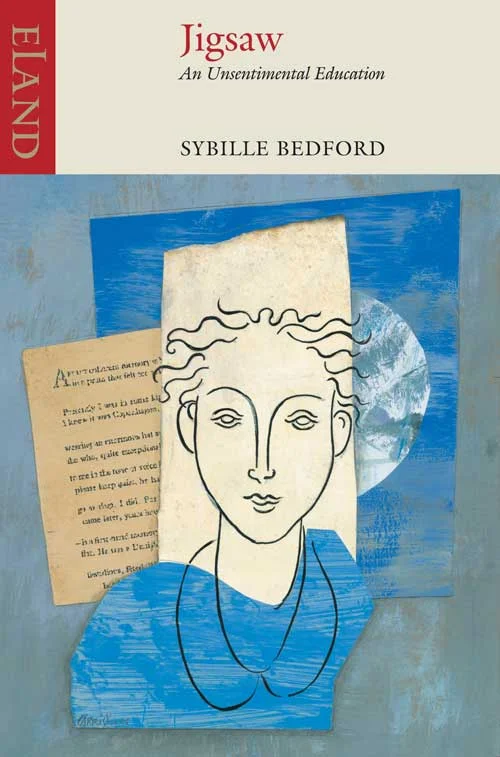
This intensely remembered, partly autobiographical novel, which was shortlisted for the Booker Prize in 1989, describes the childhood of Billi, a girl growing up in Europe between the wars. When her father dies, she swaps life in a run-down German château for an exhilarating existence with her beautiful, talented and unreliable mother on the French Riviera.
Sent away to England for schooling, the gypsy-like Billi ricochets between short-lived tutors and a life of reading, friends and public lectures. Returning to the Mediterranean, her unorthodox education – academic, emotional and sexual – continues among the vibrant community of artists, exiles and intellectuals who have colonised the coast, coaxing her towards a life of literature.
‘A deliciously evoked return to worlds, and a Europe, now almost vanished.’ - John Fowles
‘... a tense, dense autobiographical novel ... strong writing, wonderful settings, electrifying family dynamics ....’ - Victoria Glendinning

Eland are proud to reissue this compassionate novel. First published in French in 1999, but as timely and relevant today, on a subject rarely out of the news. Binebine is one of Morocco’s leading literary voices and artists and we welcome him to the Eland list.
Translated by Lulu Norman
Welcome to Paradise opens a window into the hearts of a small group of African would-be emigrants, waiting on the beach in Morocco for a boat that will take them to a new life in Europe. As we shelter with them in the darkness, we hear of the cruelty, misfortune and grinding poverty which has compelled them here, to pit themselves against the dangers of the sea and the coastguards who patrol it. Tense, dramatic and blackly compassionate, Welcome to Paradise is a striking tale of human desperation and of the media-fuelled fantasies of Western life that hold a fatal allure.
‘At once sympathetic to a people’s plight and angry with its self-delusions, this is a brave book to have written and a rich, unsettling one to read.’ The Literary Review
‘Binebine’s terse, bleak, compassionate Welcome to Paradise is both topical and rare in tracing the poverty and cruelty emigrants are escaping.’ Financial Times
Currently out of stock
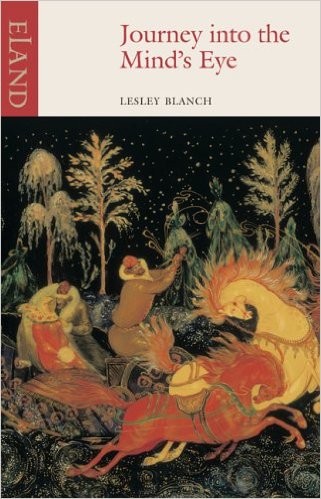
Lesley Blanch was four when the mysterious Traveller first blew into her nursery, swathed in Siberian furs and full of the fairytales of Russia. She was twenty when he swept out of her life, leaving her lovelorn and in the grips of a passionate obsession.
The search to recapture the love of her life, and the Russia he had planted within her, takes her to Siberia and beyond, journeying deep into the romantic terrain of the mind’s eye.
Part travel book, part love story, Lesley Blanch’s Journey into the Mind’s Eye is pure intoxication.
‘... the perceptions of a fine writer ... all cast upon a gorgeous canvas.’ - Harvard Review
‘If you are interested in Russia – if you are interested in love – this haunting book is one to read and re-read.’ - Philip Ziegler
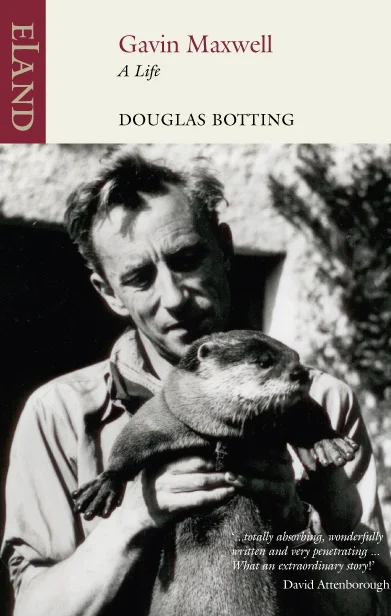
Gavin Maxwell was a romantic, self-destructive aristocratic adventurer, who worked as secret agent, shark fisherman, racing driver, poet and travel writer. His books on Iraq, Sicily and Morocco were acclaimed, but his fame as a writer rests on his bestselling story of the otters he lived with in a remote cottage on the west coast of Scotland, Ring of Bright Water.
Maxwell’s private life was every bit as turbulent. His homosexuality was masked by the love of a number of women, for whom he was a serially unsatisfactory partner. This biography is a magnificent evocation of the man, his time and the places and animals that formed such an important part of it. Never was the simple life of a nature-loving conservationist pursued by so complicated a character.
Douglas Botting was a trusted friend of Gavin Maxwell in the last 12 years of his life and a fellow explorer-traveller-writer, so was uniquely equipped to understand both the creative and destructive demons that drove him. He has created an empathetic study of a man, which reads like the most bizarre and eccentric adventure story.
‘Could hardly be bettered…Botting’s great achievement is to have looked his friend square in the face, portraying his frailties while remaining loyal to his gifts.’ Fraser Harrison, New Statesman

Translated by Robyn Marsack
Translated here for the first time into English, this collection of shorter travel writings from the golden pen of Nicolas Bouvier covers journeys undertaken in the 1970s, ’80s and ’90s. In the Aran Isles in mid-winter, he glories in the extremities of the wind outside while inside, feverish, he is enchanted by local tales which hum like a kettle on the fire. In Xian, he pays homage to the civilised brilliance and understatement of his guide, while in Korea he experiences the unchanging beauty of the Buddhist temple at Haeinsa and is marked forever by his climb of volcanic Halla-San. And the roots of his interminable curiosity and amusement are traced back to his childhood reading, and to the bitter war he conducted at the age of eight to rid himself of his arch-nemesis, Bertha.
Published for the first time in English, this is the final element in Eland’s homage to Bouvier. We already publish his cult classic The Way of the World: Two men in a car from Geneva to the Khyber Pass, as well as The Scorpion-Fish and The Japanese Chronicles.
‘Nicolas Bouvier was a writer of rare grace and subtlety. Every essay here shimmers with imaginative insight and wry humour. He has long been known to cognoscenti. Now, perhaps, his stature will be more widely recognised: one of the most brilliant, penetrating and individual travel writers of his time.’ Colin Thubron
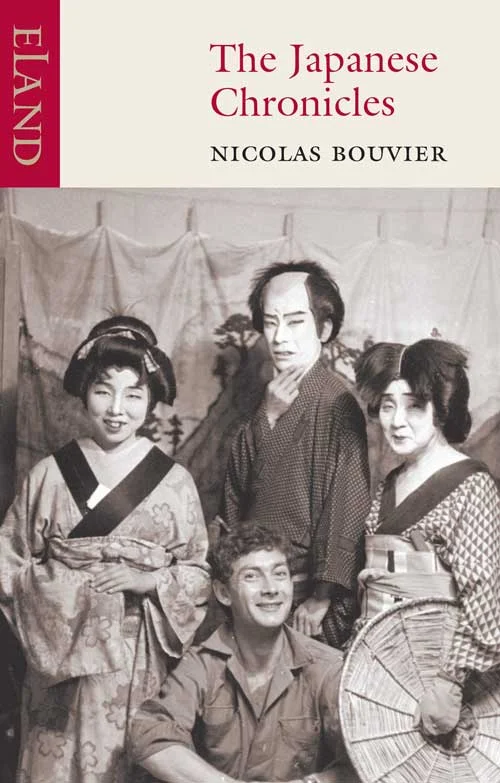
In The Japanese Chronicles, Swiss travel writer and photographer Nicolas Bouvier shares his intimate experience of Japan. Based on three decades of travel throughout the islands, his reports, recollections, and reflections take the reader beyond the commonplace into an unexpected Japan.
Whether describing village festivals or the suburbs of Kyoto, retelling Japanese myth and history, composing poems, reflecting on Noh performances or sketching memorable portraits in a few deft words, Bouvier brings his personal Japan alive in rich, evocative prose.
Some of the most resonant and perceptive travel writing ... a delight for lovers of travel and fine writing.’ - Kirkus Reviews
‘If you go to Japan, it is unthinkable that you should leave without The Japanese Chronicles.’ Le Figaro
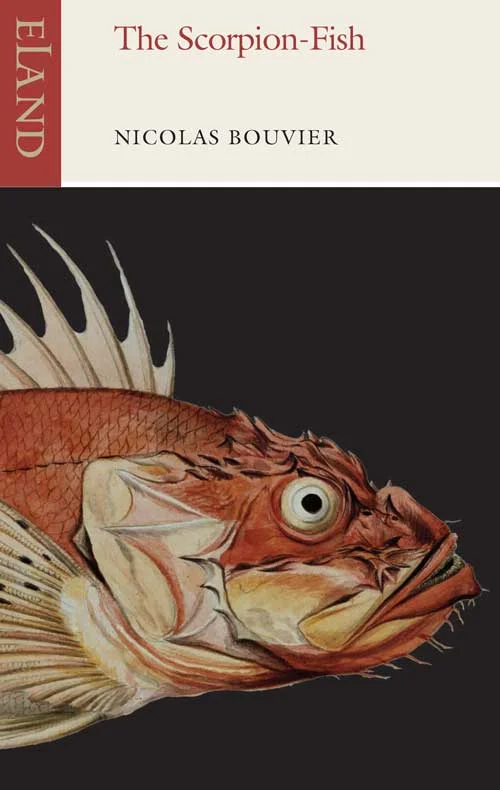
Translated by Robyn Marsack
On an unnamed island that can only be Ceylon, the traveller checks into his 117th rented room, abandoned by his lover, almost broke and feverish. A book on Indian insects deepens his morbid fascination with the crawling inhabitants of this room; a pretty world of killers, barely distinguishable from the insect like habitues of the local café, the charlatans and fake exorcists, the indolent landowners, merchants and priests. In this exhausted state, he grows antennae that are ‘tensed between the real and the occult.’
The distinction between fact and fiction is blurred, but in this world of the imagination truths are sometimes crystal clear. A long- dead, levitating priest and the beautiful but deadly scorpion-fish, symbol of Bouvier’s ambivalent relationship with the Island, are but two of the spectres which eventually lose their hold on the author, releasing him back to life.
‘A dark-sparkling little masterpiece. I defy the reader to dislodge this book from his memory and dreams.’ - George Steiner
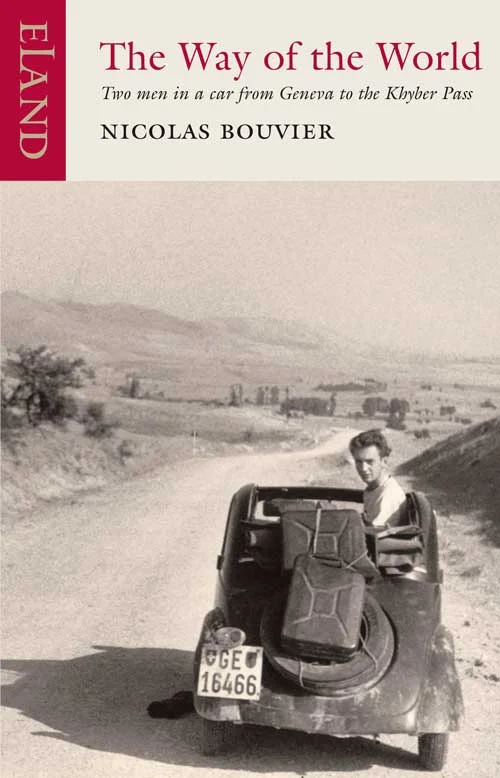
Translated by Robyn Marsack
A cult classic, The Way of the World is one of the most beguiling travel books ever written. Reborn from the ashes of a Pakistani rubbish heap, it tells of a friendship between a writer and an artist, forged on an impecunious, life-enhancing journey from Serbia to Afghanistan in the 1950s. On one level it is a candid description of a road journey, on another a meditation on travel as a journey towards the self, all written by a sage with a golden pen and a wide, infectious smile. It is published here for the first time in English with the Vernet drawings which are such a dynamic part of its whole.
‘Nicolas Bouvier’s passionate and exhilarating travel stories have in- spired generations of young Europeans onto the road.’ - Rory Maclean
‘Bouvier is that rare author who alerts the reader to the transcendent dimension of travel, by which the genuine traveller is transformed. This courageous alchemy, transmitted on every page, is what makes The Way of the World a masterpiece.’ - Jason Elliot
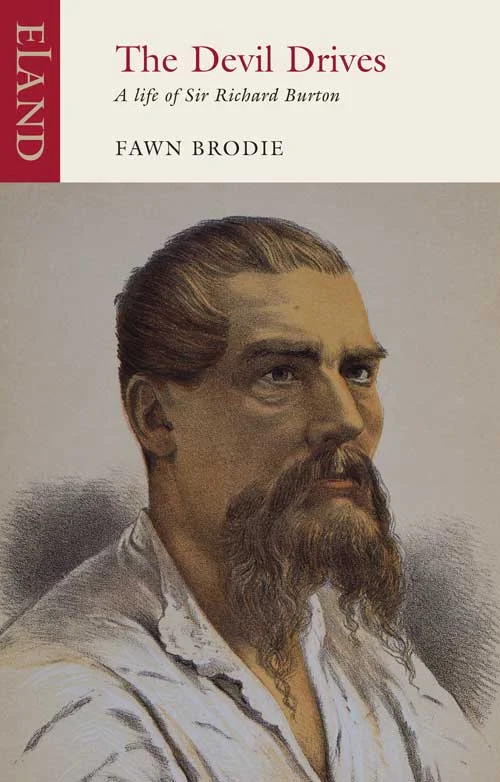
Richard Burton’s life offers dazzling riches. He was one of the greatest Victorian explorers, an innovative translator and brilliant linguist, a prolific travel writer, a pioneer in the fields of anthropology and sexual psychology, a mesmeric lover, a spy and a publisher of erotica.
Fawn Brodie has created a vivid portrait of this remarkable man, who emerges from the richly textured fabric of his time. His travels to Mecca and Medina dressed as a Muslim pilgrim, his witnessing of the human sacrifices at Dahomey and his unlikely but loving partnership with his pious Catholic bride are all treated with warmth, scholarship and understanding.
‘A first class biography of an exceptional man ... Buy it, steal it, read it.’ - J.H. Plumb, New York Times
‘The latest, far the best and surely the final biography of Sir Richard Burton, one of the most bizarre characters whom England has ever produced.’ - Graham Greene, Observer

Mission Impossible - the Central Asian city of Khiva, closed to Europeans by the Russians and a possible springboard for an invasion of India. The man to undertake it – Captain Fred Burnaby, six foot four in his socks, a brilliant horseman, a crack shot and strong as an ox, with eight languages under his belt. In the winter of 1875, braving frostbite and snowdrifts and unbeknown to his army superiors who would have forbidden it, he set out across Central Asia to investigate the latest secret Russian moves in the Great Game.
His delight in a life of risk and adventure still burns through the pages of these youthful travels, as does his spontaneous affection for the Cossack troopers and the Tartar, Khirgiz and Turkoman tribesmen he encountered on his way to meet the Khan of Khiva. Once there Burnaby was immediately ordered home by an alarmed government. Back in London, he sat down and wrote this bestselling account of his adventures.
‘So idiosyncratic, so endearing, and so funny.’ Eric Newby
‘… one of the Great Game classics ...’ Peter Hopkirk

The Station follows three high-spirited young men as they visit twenty monasteries on Mount Athos in 1927. They examine treasures, photograph frescoes and sketch the courtyards and those who live in them. They swim ecstatically off the sparkling, deserted beaches, climb mountains, talk and share meals with monks and transcribe these conversations with relish. For life is very different for a celibate hermit on Mount Athos. Time has no meaning: the Son of God, His Virgin Mother, the Angels and the Saints are all living creatures of flesh and blood, and the Pope is a heretic.
This slim book was little short of revolutionary in its fearless championing of Greek Orthodoxy and Byzantine civilization, reversing centuries of western prejudice. It was the first of Robert Byron’s travel books, revealing the flashing wit, bravery, passion and astonishing powers of visual observation which made him such a brilliant writer. The playfully obscure title is only finally explained in his last sentence: ‘This is the holy Mountain Athos, station of a faith where all the years have stopped.’
‘No better portrait of the Holy Mountain exists than this: nor is it likely to be surpassed in the future. Here in short is a classic. And a classic it will remain.’ John Julius Norwich

At the age of only 26, Alexander Burnes made two dangerous journeys beyond the frontiers of the Indian Empire, and brought back descriptions of Sind, Afghanistan and the Khanates of Central Asia including the hithertoe inaccessible Bokhara. He travelled simply with an ear for languages, which he combined with a boyish charm, insatiable curiosity and irrepressible enthusiasm. His travels was a best-seller in its day and this brand new edition allows us to recapture the heady sense of excitement, risk and zeal of one of Britain’s most accomplished secret agents before his assassination in Kabul.
‘Burnes is the most mesmerising British official and traveller of the nineteenth century. Everyone from Lawrence of Arabia to Thesiger was shaped by his example.’ - Rory Stewart

Intelligent but unpretentious, gossipy yet honest, inquiring and unprejudiced – Busbecq is the sort of man we would all like to meet on our travels.
As Habsburg ambassador to the sixteenth-century court of Suleyman the Magnificent he missed nothing: the intrigue of Roxelana at court, the unloading of Spanish prisoners of war, the healthy yoghurt and fruit diet of country Turks, the brutal realities of super-power politics or the charming, but expensive, habit of being welcomed with flowers by the Janissary guards. Busbecq describes Constantinople as ‘created by nature to be the capital of the world’, and brings the city at the heyday of Ottoman power bursting back to life. Turkish Letters is eyewitness history at its best.
‘... a classic of travel literature and a boon to historians.’ - TLS
‘Fresh, appreciative and funny.’ - Jason Goodwin

Evliya Çelebi was the Orhan Pamuk of the 17th century, the Pepys of the Ottoman world – a diligent, adventurous and honest recorder with a puckish wit and humour. He is in the pantheon of the great travel-writers of the world, though virtually unknown to western readers. This brand new translation by the foremost scholar of his age brings Evliya sparkling back to life, so that we can relish his charm and intelligence once more, whether he is describing high jinks in the bath-houses, being kidnapped by bandits, Ottoman Istanbul in its baroque heyday or a worldwide convention of trapeze artists.
‘It is typically brave of Eland, a superb publishing house that specialises in making available lost jewels of travel writing ... to bring out this unforgettable, fun yet brilliantly compelling selection.’ - Simon Sebag Montefiore, Financial Times

Penelope Chetwodes’s middle-aged companion on her ride over the mule tracks and goat paths of Andalusia in 1961 was the twelve-year old bay mare, La Marquesa. This treasured animal, borrowed from the Duke of Wellington, brought her experience of native travel conditions to the expedition. Together the two travellers brought out the very best in their Spanish hosts, whether met on road, crude country Inn, cavehouse or during Penelope’s frequent attendance at unexpected Church services. The result is a journey, through the region north from Granada, described with warmth and wit, humour and candour lit up by an infectious personal fascination for horses, God and Spain.
‘Enchantingly self-revealing, without being in the least self-conscious’ - Daily Telegraph
‘... unusual and life-enhancing.’ - Raymond Mortimer, Sunday Times
The entire Eland classic list, which is all our paperbacks (129 of them) that bear the red-tipped Eland logo on their spine. We will pack it up into four big cardboard boxes, and either deliver it ourselves, or trust it to the Royal Mail. If you are mapping out some library shelving, they fill eight foot six.