
Your Custom Text Here

Norman Lewis: A Curious Collector of Curiosities
Can a book save one’s life? I used to think so when stationed in Mogadishu, avoiding thoughts of murder or suicide in that sunburnt madness only by immersing myself in Gerald Hanley’s Warriors (1971). Day after day I would throw myself on to my bed after another utterly fruitless, pointless day in the president’s office, and lie down, sweating beneath squadrons of flies and mosquitoes, and try to forget about it all.
By Pico Iyer
Pico Iyer is a British-born essayist and novelist of Indian origin, best known for his travel writing and in particular his books Video Night in Kathmandu, The Lady and the Monk and The Global Soul. He has written for Time since 1986 and his essays and reviews have appeared regularly in Harper's, The New York Review of Books and The New York Times.
The following essay appears in the book Tropical Classical: Essays from Several Directions.
Norman Lewis is a dangerously easy man to idolize, if only because he lives so far from self-idolatry. A writer’s writer and a traveler’s traveller, in the very strongest senses of those words, he has quietly gone about his business for fifty years now, writing thirteen novels and, more famously, perhaps, ten works of nonfiction that mix beauty and irony in the most elegant of watercolours. Everywhere you go, in time and space, you seem to find Lewis: eon Indochina, in the early ‘50s, negotiating over chrome-plated American cars in a Phnom Penh opium den, then meeting the Vietminh guerrillas through a taxi girl; in Cuba, at the outbreak of the revolution, amiably chatting with Fidel’s executioner, an American who sports cuff links made of spent shells; in Togoland, being served on the veranda by “white-coated, whispering stewards who moved as stealthily as Indian stranglers”; in Naples, as a British intelligence officer, presiding over a scene of almost Dantean horrors, in which corpses of grown men were squeezed into child-size coffins and princes begged their sisters to become whores. His sunlit elegies of Vietnam and Burma (A Dragon Apparent and Golden Earth) were best-sellers in the ‘50s, and his novel The Volcanoes Above Us sold six million copies in the Soviet Union. His eerily knowing account of the Mafia (The Honoured Society) was serialized in six enormous parts in The New Yorker, and his report on the genocide of Indians in Brazil was at the time the longest article ever published in the Sunday Times of London. Lewis wrote about the destruction of the Amazon rain forest ten years before it became a fashionable issue, and his investigations into the elimination of indigenous peoples led to the creation of Survival International. Yet through it all, he has consistently written his seven hundred words a day ins a state of “almost monastic calm” in the English countryside, far from the glamour of London’s literary circles, far from the headlines. Norman Lewis is one of the world’s last unguarded secrets.
Among his peers, Lewis has become a kind of surreptitious hero, and the connoisseurs of modern British writing have vied with one another in their eagerness to laurel him in praise. Cyril Connolly wrote that “Mr. Lewis can make even a lorry interesting,” and V. S. Pritchett that “he really goes in deep, like a sharp, polished knife.” Auberon Waugh, son of Evelyn, has called him “perhaps the best [travel writer] since Marco Polo,” and the British papers routinely describe him as “the doyen of our travel writers.” In recent years, moreover, his reputation had enjoyed a kind of Indian summer, as his early travel books have been reprinted, while his newest pieces have been showcased in magazines like Granta. Yet perhaps the greatest compliment of all for this mild-mannered, self-effacing man with the scholarly air, now eighty, comes from the almost legendary British photographer Don McCullin, who has made a career of venturing where mortals fear to tread. “There was one writer who always brought out the best in me,” writes McCullin in his recent autobiography, Unreasonable Behaviour, “and in a way I became his disciple.” The role model for the swashbuckling was correspondent turns out to be none other than the rigorously unshowy, self-denying Lewis, “the kind of man,” as McCullin writes, “you could pass in the street without realizing anybody had gone by.” In a tone of near reverence, McCullin describes Lewis, already in his seventies, wading waist deept through Venezuelan rivers, serenely hopping up and down while a tropical fish makes mince-meat of his groin; Lewis imperturbably sitting in a red-light hotel while peasants make rowdy preparations for a cockfight; Lewis visiting a local witch doctor—named Mary Skull—whom even McCullin cannot face.
So when I went to visit the retiring writer, on a drizzly winter afternoon, in his remote village in Essex (“the ugliest county” in England, as he gleefully calls it), I did not know quite what to expect: Lewis so shies away from the spotlight that the library records only two interviews with him over the past three decades, and his entry in Who’s Who is as short as possible. I was somewhat taken aback, therefore, when a highly courteous man with a wistful smile, in thick sweater and sturdy corduroys, came out into the rain to greet me. As he led me into his four-hundred-year-old Tudor parsonage and graciously sat me down in a room full of African prints, Siamese angels, and Islamic miniatures, I felt myself in the presence of a kind of watchful, kindly owl, with a courtly military bearing. And when I brought out my tape recorder, Lewis peered at it with the same beady-eyed, amused attention that he clearly brings to all his subjects, wondering aloud whether this intriguing machine might save him from the hazards or scribbling down all his notes in the back of an aged car jouncing along unpaved roads, in a hand so unreliable that he cannot read his notes himself by the end of the day. Such delightful discomforts he had enjoyed most recently in India, where, typically, he sought out only the most blighted, unvisited, and undeveloped areas, and came back with a vision of pastoral idyll. India is “so glamorous,” he said, “so civilized,” choosing perhaps the last two adjectives that most travellers would use. The very next week, soon after his eightieth birthday, and just back from Barcelona, he was off, alone, to the wilds of primitive Irian Jaya, buoyed beyond measure by having read that the local tribesmen has greeted some of the most recent Western visitors—missionaries—by “grabbing them all and executing them and barbecuing them! Thirteen of them! I’ve certainly got to get to this place!” he said with unfeigned enthusiasm. “Apparently, you’ve got to hire a helicopter at great cost, but I’ve got to go to this place and try to talk to someone who was involved in that great tribal meal!”
While awaiting his audience with the missionary-eaters, Lewis was tapping his fingers in an England that, in his idiosyncratic eyes, seems as alien as the Gobi. “Although I’ve spent most of my life in England,” he confessed to me in his soft, rough voice, “I’m temperamentally totally, totally Welsh. I really find very little point of contact with the English temperament. The people I know here actually hunt!” He made them sound far stranger than cannibals. “People living in Wales are almost as different as the Chinese,” he continued sotto voce. “They adopt a certain amount of natural color and polish, and often the right kind of accents, and appear like pukka English people”—his voice dropped to a conspiratorial whisper—“but they’re really quite different.” He made himself sound like a spy almost, an interloper investigating the strange ways of this tribe known as the English. “I’m probably trying to romanticize it, by the way,” he offered cheerily, just as I was falling into the spell, but the Welsh did, he believed, tend to be more nomadic, more evangelical, more ready to cry in public. “I am absolutely an outsider,” he concluded with quiet extravagance. “You could safely say that, apart from one or two people who come up from London, I’ve got no friends!”
Before long, in fact, everything in the house was beginning to take on the peculiar coloring of the Lewis world, and everything seemed fodder for his friendly self-deprecation. His very Engish-seeming wife came in with tea and scones. “Australian,” he confessed as she went out, all but throwing up his hands in helplessness. “My first wife came from a Sicilian family! I don’t feel I’ve organized or engineered this. It just happened.” Then his twenty-year-old daughter appeared. “Samara,” he explained, “which, as you know, in Arabic means ‘dark’. But she is completely blond!” Then he effected an introduction to his retriever, Sheba. He paused for a moment, then added gloomily, “All the dogs in this area are called Sheba”
Lewis’s whole life, indeed, as he tells it in his uncommonly strange and riotous autobiography, Jackdaw Cake, is one long brocade of fanciful absurdities. His father was a madcap pharmacist who would, claims Lewis, translate the prescriptions of his customers out of Latin, assure them that the prescribed goods were close to poison, and press on them instead a concoction of his own devising; his mother was greatly concerned with the children of Osiris. For part of his childhood, Lewis was sent to be raised by “three insane aunts” in a sullen, close, and incest-haunted Welsh village whose inbred little world of taboos and tribal curses he makes sound as alien as anything in Belize. One aunt was an epileptic, given to running screaming through the house once a day, and one cousin was a retarded boy who would walk with Lewis down shopping street, hitting matchboxes with a golf club. The main highlight of his hometown, he writes, was “a rubbish dump smouldering incessantly like a pigmy Etna.”
When he returned home, to the dreary London suburb that features (coincidentally) in the movie Life Is Sweet, it was, he writes, to find that his father had become a proleptic Buddha of Suburbia and now spent much of his time hypnotizing birds, wondering whether jellyfish had souls, and entertaining such professional contracts as “the shaman of the Blackfoot Tribe named Thunder Star, who in a fit of intense mental concentration had caused a small tributary of the Missouri River to run backward.” Graduating during the Depression, Lewis saw his friends move on to become an assistant rat-catcher, a crucifix salesman, and a professional punter at the Tottenham Palais de Dance. He himself went into business bottling his father’s elixir, taking pictures of weddings, and becoming what Time later called “a minor tycoon in photographic supplies.” By day he raced motorbikes; by night he entered literary competitions in magazines such as Titbits. (“I can safely say that I never won a first prize,” he assures me. “I probably won about two or three second prizes—over a long period—and innumerable third and consolation prizes.” He could almost be talking of his life.) He also got into the business of buying and selling cars, the first vehicle he owned being a boat-shaped Bugatti whose dashboard was covered with “a pair of lovers in lascivious oriental inter-twinings” and whose radiator cap was a representation of the elephant god Ganesha (the addition of its former owner, and Indian). Like all the details in his life, it sounds almost too good to be true.
By his mid-thirties, his circumstances were already irremediable tragi-comedy. He married, almost without meaning to, a wild and mercurial Sicilian girl, whose father was a minor Mafioso. When he took the Sicilians to meet his parents for the first time, he writes, everything was going swimmingly until his father suddenly started receiving messages from the Other World and began writhing and babbling uncontrollably. He took a message for his father-in-law to a bowler-hatted Italian count (married to a former Miss Italy) who promptly suggested wife swapping, and then he signed on as a photographer to go to North Yemen with Ladislas Farago (“an extremely charming villain,” he remembers, who later became an advisor to Nixon and, after fabricating a story about meeting Marti Bormann in South America, a millionaire). One day, not long after being stuck in the middle of a hurricane in Cuba and hearing about how voodoo dolls could be purchased at the local Woolworth’s, Lewis learned that war had broken out in Europe. Hurrying back to Britain to elist, he was dispatched to Algeria (because he spoke “Adenese bazaar Arabic”—as well, though he rarely mentions it, as Russian, Spanish, French, German, Italian, and even Welsh). His commanding officers in intelligence were—in this rare telling—an expert in Old Norse, an Australian obsessed with coal, and a man who chose to address subordinates while shaving off his pubic hair. His field security officer spent most of his time talking Latin. At war’s end, he writes, his doctors told him he “should make no attempt to come to terms with a regulated and sedentary existence.” Thus he embarked on the two most unstable of all occupations, traveling and writing.
Lewis assures me now that he had no training in writing. On the steamer to North Yemen, he found books by Somerset Maugham and Ernest Hemingway, and the latte quickly became his hero. (Many years later, he was sent by Ian Fleming to Havana to look in on Hemingway, arrived to find that his contact there, the man who was partially the model for James Bond, had just challenged Papa to a duel, and, when finally he saw the Nobel Prize-winning author, found him so sad that “it was hard to believe that he would ever smile again.”) Not rich enough to buy books, he found his only other source of learning in the local library, which, through an eccentric bequest, had none of the English books Lewis wanted to read but an enormous collection of Russian novels, “shelf after shelf, with every Russian novelist, including all the obscure ones.” So the young Lewis devoured them all. “I was dazzled by Chekhov, for example, and by comparison with the kind of stories that were being published in English magazines, they were extremely realistic. Even the people in Samarkand or Central Asia, in Chekhov, in highly exotic situations, struck me as eminently believable.” And even now, he so loves good prose that he underlines fine sentences in the newspaper.
It is tempting, when first one enters Lewis’s books, to see him as one of the last examples of that endangered species, the intrepid English traveler—he was, after all, a near contemporary of Robert Byron, Evelyn Waugh, Peter Fleming, and Wilfred Thesiger. Yet in reality, nothing could be further from the truth. Not just because Lewis feels so estranged from England, but more because he has always lived a universe away from the clubby small world of his traveling compatriots. Where more of them were Eton and Oxford boys who travelled the world with the imperial confidence of empire builders on vacation, and roamed around Ethiopia and Afghanistan safe in the knowledge that there would always be some school friend waiting for them at the next consulate with a gin and tonic, Lewis always traveled alone, grew up humbly, never went to university, and financed all his travels with his own implausible business. And where they customarily made their exotic destinations a setting for a knockabout comedy or sportive digression, speeding through them in a mood of blithe urbanity, Lewis made foreign cultures his one and only subject. Settling down abroad, disappearing into the background, and unobtrusively living like a local—travelling to Burma in a longhi skirt, eating food with his hands in India, going on dog-buying expeditions in Vietnam—he acts as if he were one of the natives’ most eloquent spokesmen. He seeks not to rule the world but to give himself over to it. And in place of breezy, chatty entertainments, he produced books of lush and highly detailed beauty—textured, contextual, meticulous—in which amusement and affection play upon their subjects like sunlight off a stream.
Indeed, not the least striking thing about his romantic adventures is how little he seems to dwell on them. Lewis’s books and travels are stuffed with almost impossibly colorful and curious happenings, yet none of them disturbs the stately and majestic flow of his rich and study paragraphs. In his autobiography, he devotes exactly one and a half pages to the last thirty-five years of his life, and one paragraph to his divorce; burnished and polished until it shines, his prose simply rolls on, sonorous and imperturbable, through every event and emotion: in all the twelve books of his that I have read, I have never found a cheap or careless sentence (it is almost too fitting, in fact, that in the card catalogue, he is easily confused with another Norman Lewis, born just one year later, who wrote a book called Power with Words). There is something deeply settled about Lewis’s persona and his level prose that underwrites all his wandering, and something old-fashioned about his ability (like Colin Thubron) to fashion the most dignified of sentences while traveling third class. Out of marvels he makes melodies.
If you read the books very carefully, you will notice that Lewis contracted malaria three times, fractured his skull in a car crash, and saw his skin and the whites of his eyes turn yellow. He saw men brain one another with the femurs of corpses and the howling procession of a bush devil. Yet none of this detains him for more than a sentence or causes his prose to lose its breath or poise. It is this almost implausible sense of reticence, together with his brush mustache and his air of gracious decency, that gives Lewis something of the sepia glamour of the strong, silent type in an old British war movie, tall, observant, good in an emergency, and full of sympathetic fortitude (one of the great ironies of his life is that this most implacable of Empire-haters embodies the very qualities of open-mindedness and honesty that made the Empire work: he is the kind of upstanding, understanding type who seems to belong to a Paul Scott novel). The most impressive thing about his knowledge of obscure places is how little he seems impressed by his own place in them: even the British reviewers, so suspicious of self-display, have sometimes complained that he is almost too modest. “I may be selfish,” he told me matter-of-factly, “but I don’t think I’ve got a normal, average ego.”
It is this kind of stiff-upper-lip sangfroid that distinguishes Lewis’s first two Asia books, which are still, in many ways, the best introduction to his work. Traveling to Vietnam and Burma in the early ‘50s, when both were still isolated and undiscovered (much as he is), he came back with what is still, forty years on, the definitive portrait of Indochina in all its sleepy, riverine languor, and Burma’s unworldly charm (he completed a trilogy with his tour around a timeless India). Lewis has always seemed to have a soft spot for lazy, shady, spellbound lands—he still schedules his trips so as to escape the gloom of the English winter—and he seems to warm up to cultures that enjoy a kind of easygoing tropical morality, far from the puritanism and “joyless prosperity” of the north. Somehow, one always sees him in the sun, in some quiet rural setting, surrounded by people in festival mood (both the Laotians and certain Indians, he claims, regard it as ill bred to work). And everywhere he goes, he follows no agenda but the satisfaction of curiosity. When I asked him, for example, if he’d ever write on South Africa, he looked astonished. “To write well about a thing, I’ve got to like it. I’m not going to be infuriated all the time.”
Those first books, moreover, lay out all the distinctive features of his universe: the stoicism, the delight in beautiful absurdity, the sense of sunlit requiem. Though he scarcely mentions it (three separate Indochinese rebellions “made traveling conditions sometimes arduous,” he writes negligently), Lewis slept in rooms full of scorpions and rats, crouched like a hermit crab in a hole in the back of a bus, aware that if bandits attacked, he would be the first to be killed, and ventured blithely into war zones, encouraged in one instance by the advice of a man named Oh Oh, who assured him that he was in no danger of an ambush (but was very likely to get attacked). Over the course of his travels, I have noticed, Lewis has drunk black frog spawn, munched qat leaves, and eaten Belizean rodents, locusts en brochette, camel-hump fat, and lamb’s testicles. In India, as a septuagenarian, he happily went to all the murderous areas that even Indians shun.
Lewis, in fact, is one of those even-tempered travelers who seem almost to relish things going wrong—in fact that the pilot scarcely knows what he’s doing, or the maid barges in a dead of night, “bearing a raw potato on a silver tray.” He is the most equitable of travelers, partly because he is the least provincial of souls (he actually apologized to me for having had to spend one night in a deluxe hotel in Calcutta). And so complete and omnivorous is his absorption in the world around him that he manages understatedly, to assemble a mosaic of unlikely details. In Burma, a monk carrying around a “biscuit tin commemorating the coronation of King Edward VII, on which had been screwed a plaque with the inscription in English: ‘God is Life, Light and Infinite Magnet’”; in Vietnam, a group of village children being taught to breathe, some local beauties putting on a version of Oklahoma!, and thirty-seven schoolchildren singing, under a ritually polished buffalo skull, “Auld Land Syne,” in French. The world he finds is at once utterly plausible and utterly strange, perfect material for his hilarious, deadpan wit. In Vietnam, for example, he is especially fascinated by the Cao Dai religion, which worships Buddha, Jesus, the Jade Emperor, Victor Hugo, and La Rochefoucauld, among others. At dinner one night, he finds himself next to a devotee who asks after Victor Hugo. “ ‘I am a reincarnation of a member of the poet’s family,’ the young man said. I congratulated him and asked if he also wrote.” It is not hard, with his mix of dry humour and propriety, to see why his best friend (when he admits to one) was S. J. Perelman.
Yet however much he revels in the oddity of things, in the end Lewis catches most of all a sense of rural quiet, and of Eden. “A distant clock chimed sweetly an incorrect hour.” “Sometimes as the car passed a scarlet thicket of cactus and geraniums, a nightingale scattered a few notes through the window.” “All day and all through the night the cool sound of gongs comes over the water from unseen Moi villages.” His sentences take flight on lyric wings. Luang Prabang was “a tiny Manhattan—but a Manhattan with holy men in yellow in its avenues, with pariah dogs, and garlanded pedicabs carrying somnolent Frenchmen nowhere, and doves in its sky.” “Down in the village,” he writes of Ibiza, “life moved on with the placid rhythm of a digestive process,” and his prose has this same almost vegetative calm, soaking up the cadences of the unhurried villages that to him have all the timeless rhythms of a paradise.
Yet all paradises are made to be lost, and if most of Lewis’s travel books are love songs, they are also elegies, memorials to a purity threatened or already gone. All his books have this sense of dusk in them, of coming darkness; he went to Indochina and Burma, he wrote at the time, because he feared that their fragile cultures would soon be lost of else closed off to the world (and in both suspicions he was right). Cultures are often protected, he believes, by insurgency, pestilence, and bad government, and “progress” often marks the beginning of the end for them. Perhaps the strongest expression in all his books comes in the preface to a reissued collection of journalism, in which he sorrowfully, and unequivocally, repudiates his earlier belief that any place could ever remain unspoiled.
So intense is this sense of loss that he finds the same pattern even in England. He bought his present house thirty-three years ago, he tells me, in part because he saw a green woodpecker in the garden, “the only exotic bird in England,” and in it he saw a way to cultivate his fondness for “plants and all growing things.” To this day, he brings back samples from his travels and plants them into his garden, a third of which he has turned into overgrowth to “encourage the presence of the occasional fox, rabbits, birds.” At its best, he finds himself still living in a kind of rustic paradise. “I like to walk around the countryside,” he tells me. “If there are any birds or flowers, I make a note of them, and look at the scenery; think; and go home.” And even in England he finds traces of the protected, medieval village that attracts him everywhere. “Even now there are people here whose surnames I don’t know—incredible!” No one haggles, or worries about race, he says; “the people we deal with here are an extremely kind people,” and best of all, most things in the village “are more of less as they were seven hundred years ago.”
Yet here, too, he has seen the unfallen vision fade. When he arrived, he says, “wherever you went for a walk, there used to be hares gamboling around hedges. Now everything’s gone. No flowers: they’ve all been sprayed out of existence.” Worse still, the ancient rhythms of the place have been disrupted by “people from the city, with their different morality, and different standards, and the commercialism that goes with supermarkets. With every decade that goes past, the villages is 25 percent uglier than the decade before.” The area’s new medical building, he says, “looks like a paramount chief’s kraal in Zambesi. It’s totally exotic, and it’s the wrong kind of exoticism. Its unsuitability is extreme.” Then, just as he’s getting most passionate, he gives me his godfatherly twinkle. “Mind you,” he says, “that’s a typically exaggerated response.”
Thus Lewis’s primary role, in a sense, is that of a caretaker or protector of endangered cultures, practices, and peoples; more and more, this former photographer and camera salesman seems to be traveling to places to rescue them, or at least to bring back snapshots of a vanished world. While some travel writers ornament and structure their impressions around history (as Jan Morris, say), and others literature (Paul Theroux), or even personal and natural history (Bruce Chatwin), Lewis is closest to an anthropologist, a student of the human animal who loves its most pagan and atavistic forms (“backward” is for him a term of the highest praise). Medicine men and superstitions are his thing, animist rites and secret societies (from Liberia to the Mafia). And where a writer like Morris, say, or even Theroux, is most at home in cities, catching the beat of dinner parties, buildings, and bright stimulations, Lewis is very much a pastoralist, drawn to the age-old rhythms of the village. (Part of the freshness of his Indian book comes from the fact that he never even visits Delhi, Varanasi, or Bombay, and never bothers, therefore, with the standard meditation on Indian energy and poverty; the India Lewis sees is not overcrowded but lonely, and the books he cites, living in his own untrendy world, are not those of Naipaul, Rushdie, or Chaudhuri, but authors like Ibn Battuta, in the fourteenth century, and seventeenth century like Portuguese travelers.) Like the best anthropologists, moreover, Lewis takes great pains to travel light, deferring to village customs (he always, one notices, uses local honorifics) and leaving his sense of right and wrong at home: in Naples, for example, he realizes that to refuse a bribe is to throw the system into chaos, and in India, to his delight, he finds tribal peoples for whom the ultimate sin is sexual fidelity. His gifts are not analytical; they are, rather, appreciative, those of an extremely patient, careful, tolerant observer who simply records details without passing judgment on them.
Indeed, if there is one flaw in all his writing, it is, I think, that he sympathizes so deeply and fully with aboriginal peoples, and is so put out by the threat of an air-conditioned future, that he comes close to creating an almost Manichaean struggle between “the gentle backward civilizations” and “shy primitive people” on the one hand, and the “juggernaut” of the modern world, on the other. The only people he seems not to savor are his own people, and, at times, one almost feels that he agrees with the Burmese (who regard foreigners as not quite human), or the Guatemalans (who think of tourists as nothing more than “ghosts”). At times, indeed, he appears so painfully aware of the dangers of “civilization” and so opposed to all forms of colonialism (not least the kind practiced by tourists) that the “poor, but supremely happy” natives seem almost too charmed to be true. When he writes, say, that Vietnamese armies used to carry lanterns at night to give their enemies a fighting chance to see them, or that cyclo drivers in Cambodia used to tip their passengers, one begins to suspect that his kindly eye can somehow see kindness everywhere, and that the other man’s garden is always greener. Sometimes, in fact, slapping off “the bourgeoisie” like so many flies, roughing it at any cost, and finding ways to live in Ibiza for a few pesetas a summer, this most gentlemanly of Old World scholars sounds like a classic hippie.
The paradigm of this process is captured in his book Voices of the Old Sea, an account of three summers he spent forty years ago as a fisherman in a tiny Spanish village. The book is, in effect, a wrenchingly detailed autopsy on the ruins of a place he loved. It is the tale of a decent and good-natured man who tries to build up the unspoiled village into a tourist site, importing foreign guitars to a place that has never known their music, turning restaurants into Moorish cafés, and bringing in dancing bears—turning the village into a version of the Spain that foreigners expect. Soon the primitive, Chaucerian world that Lewis first entered (where there was a taboo against wearing leather, and the fishermen, he says, spoke in blank verse, and village enchanters could be found) becomes a replica of itself, the locals are learning about bikinis and public kisses from wealthy French holidaymakers, and fishermen are turned into bellboys, exiles in their own home. I happen to be one of those who believe that the horrors of tourism are all too easily exaggerated and that, in fact, the trade often brings benefits as well as sorrows, quickening an interest in customs that may have long lain dormant, and providing people with a sense of choice, and opportunity, as well as the facilities that we, in our comfort, would often wish to deny them. Nonetheless, it is almost impossible to resist the heartrending cadences of Lewis’s lament, and his sadness as his second summer ends and he knows that the third can never be the same again. “The sun had crisped away the last of the stubble from Don Alberto’s land . . . and the dry clicking of a water-wheel turned by a donkey sounded like the solemn tick-tock of a grandfather clock deep in the ears.”
Not surprisingly, Lewis is the first to disparage this tendency in his own writing—“Every this Welshman would like the opportunity to get up in the pulpit, and I may be affected by that to some extent”—and frankly volunteers that he went through the whole of his manuscript on India, “cutting out numerous passages in which I thought I was taking a moral stance.” Yet the fact remains that in recent years his traveling has assumed more of a crusading aspect, and as well as being an observer, he is more and more a kind of witness. As he grows older, his lovely, careless rambles have acquired a greater sense of moral urgency, and his sympathy for embattled peoples has turned into a quiet indignation on their behalf. The focus of this outrage has been very much like the missionaries (the people most likely to affront someone who dislikes self-righteousness in any form and takes specil care not to impose on another culture’s values). Lewis has always been a glinting-eyed opponent to religion (the result, perhaps, of being the one skeptic in a household of fundamentalists); and he can hardly conceal his delight when the cry of the muezzin in Tunisia, due to a technical malfunction, intones only, “There is no God,” or when “God is Love” becomes, in tribal translation, “The Great Spirit is not angry.” The fishermen of Ibiza, he notes admiringly, were “almost savagely anti-Catholic” and regarded it as an ill omen even to set eyes on a priest; and one of the things that seem to have won him over to his first wife was that she despised religion. Lewis has always regarded missionaries as mercenaries of a kind, pledged to a conversion that is in effect corrosion, and so to a kind of ethnocide. And in his most impassioned works, he has conducted painstaking research to show how the very group set up to protect the Indians in Brazil went about exploiting—and even exterminating—them, while various American religious groups in South America have gone about conquering souls with the help of shirts infected with the smallpox virus and poisoned candies. Still, when I asked him about his literary influences, the one he singled out was the King James Bible. “I am probably one of the few non-Christians who has read the Bible through, amost of it two or three times,” he said, beaming. “Because it is superbly written, and the stories it contains are excellent.”
In a sense, indeed, Lewis has so strong an attraction to the extraordinary, and is so drawn to life in extremis, that his writing often acquires an almost theological intensity, as if some of the places he knew were suspending in a state of Arcadian purity, while others were lost in a fury of hellish confusion. If part of his vision seems drawn from Poussin, part of it seems derived from Bosch. And as one goes through his writing, one finds horrifying accounts of cruelty and terror almost beyond imagining: teenagers performing decapitations, men biting one another’s throats out, or (a typical Lewis irony) men who have eaten human flesh refusing liver on religious grounds. The epicenter of this can be found in his coruscating book about war, Naples ’44. In it, he registers imbecilities of war madder and more horrifying that anything in Heller or Pynchon, and the more terrible for their calm. Naples, by 1944, was in his account a city reduced to an almost medieval state of poverty and desperation, a place of exorcisms and evil eyes in which three out of every four young fiancées had entered a brothel, and a father of five was supporting his family on “just over one pound a month.” Even the local aquarium was empty, looted by starving citizens. As he describes all this in his tone of clenched pity, Lewis develops a scene of almost unimaginable horror, in which glass-eyed girls try to sell themselves and lunatics roam the streets (there being no room in the town’s asylum). Midget gynaecologists ply their wares, and grown men work as professional mourners. “Churches are suddenly full of images that talk, bleed, sweat, nod their heads and exude health-giving liquors.” And at the end of his twelve months there, he writes, as only he would do, “Were I given the chance to be born again and to choose the place of my birth, Italy would be the country of my choice.”
The madness of war also provided him with plenty of material to satisfy his taste for irony. In the Jacobean chaos of a world turn upside down, lawlessness became the order of the day. The papal legate drove on stolen tires. The Allied command talked of using infected trollops to sap the enemy’s strength. Soldiers were given guns they had never been shown how to use, and infantrymen raced into battle armed with mouth organs. While the innocent were hounded, murderers were set free. “In houses said to contain caches of arms we found nothing more lethal than unemptied babies’ chamber-pots; while flashing lights in the night were always people on their way to the cess-pit at the bottom of the garden.” The absurdity of war astonishes him even now. Just a week before I visited, he tell me, he picked up the Sunday Times and read about an aristocratic English armored unit in the Gulf commanded by a man who prefaced his orders with a blast on a hunting horn he’s inherited from his grandfather. “Can you imagine it?” he says in wonder. “This fellow with his hunting horn! He’s got one hundred fifty tons of tank he’s going to ride in, and he’s facing Iraqis, who have a totally different attitude towards life, and what is he going? He’s back in Balaclava, he’s about to indulge, essentially, in a Charge of the Light Brigade! It’s grotesque!” He shakes his head. “A hunting horn!”
The final black irony of the Italian campaign, according to Lewis, was that, in the madness of a world turned into a death’s-head mask, the Allied forces actually set about rehabilitating the Mafia (which Mussolini had almost succeeded in destroying); an illiterate mafioso was installed as the mayor of Palermo, and half the cities in Sicily were given mayors with Mafia connections. This topsy-turviness became the occasion for Lewis’s most fiercely reported book, The Honoured Society, in which he does for the Mafia what Margaret Mead did for the Samoans. Clearly, a world in which a criminal organization was called “the honoured society” and gangsters were looked up to as “men of respect” could hardly fail to appeal to a collector of anomalies like Lewis, and he was guaranteed to respond with relish to an island in which monks carried heavy automatics, became lira millionaires, and set up clubs for the exchange of obscene letters. The Mafia, for their part, rented out seats for confession, sold bloody relics of “stigmata,” and produced sixty fingers belonging to Saint John the Baptist and forty heads of Saint Julian. In one town, he claims, every citizen wore black; in another, Mussolini was told that not a single man had died of natural causes in the previous ten years (Il Duce himself required Mafia protection). As one Mafioso memorably put it, “We were a single body, bandits, police and Mafia, like the Father, the Son, and the Holy Ghost.”
For all this, though, one feels that Lewis could not help being fascinated by the sheer bravado of the Mob, and I remember his saying that he could not write about something that he did not like. “The prison of Palermo,” he reports almost with admiration, “had in fact become almost a Mafia university where apprentice members received refresher courses in the latest developments in crime”; it also served as a kind of “test home” in which killers would settle down for a while, ordering in women and fine meals, firing wardens they didn’t like, and, in one case, sauntering out again for a couple of years to conduct banditry in the hills. And Lewis, always ready to interpret foreign codes, found a backhanded order in their crookedness. The Mafia had become “a kind of beleaguered landed gentry,” he writes, who still followed “the sacred law of vendetta” and had “an iron morality of their own.” Only when some of them began to go to America, and grow more ruthless and rapacious, did they forfeit their sense of honor (even the Mafia, in his book, isn’t what it used to be—having been corrupted by America!). Treating the Mafia as seriously as a tribe in Mali (which in many ways it resembles), Lewis excavates its rites with scrupulous vitality.
Yet for all the decline and depravity he’s witnessed, Lewis does, in the end, seem the cheeriest of souls, as open to adventure as a boy, and as ready to give trust and sympathy as one who’s never been betrayed. “I’m a sort of happy pessimist,” he tells me brightly. “I don’t believe anything’s going to get better, but I’m fighting a rearguard action against absurdity and ugliness.” Again and again, as he explained to me why Cubans are so handsome, or how he had once driven “a colossal Buick, a fireball, eight-litre engine, going about a hundred and twenty miles an hour,” into a chicken-wire fence on his way to see Cesar Chavez in California, he returned to how “kind” people were, how “charming”, how “the poor of the earth tend to be, to some extent, capable of such kindness!” When I asked if he’d still want to be reborn in Italy, he said, “They are very humanitarian still, the Italians, generally speaking,” and told of how the Neapolitans had risked their lives to protect Allied soldiers from the Germans.
Even though he can hardly comprehend English pubs in Greece and Bierkeller in Phuket (“Alpine houses in the tropics, with sand and sea all around, and roofs specially designed to stand the weight of snow!), when I asked him if he thought travel writing itself was on the verge of extinction, he gave a vigorous no. “I can think of all kinds of places where people have never been!” Even in Seville in 1981, he found “mystic carpet-baggers, ‘cosmobiologists,’ whirling dervishes, American fundamentalists howling for Armageddon, and sects dating from the pre-Christian era,” and even there, in modern Europe, he could conjure up visions of Elysium—“Orange blossom bespattered cobbles, and there was a champagne sparkle of May in the air.” And though he does sound wistful about the fact that both Vietnam and Burma, which found their fondest and most utopian of voices in his books, have consistently refused him re-entry (at the same time that Vietnam admits the very men who fought against it recently, he bears them no ill will. Travel, he says, “has become to some extent like taking an aspirin—you develop a certain degree of addiction.” And it has also, he adds with characteristic modesty, taught him how to “develop a certain amount of vision. I learned from Don McCullin how beautiful the ordinary can be. Previously, the only things that attracted me were nonordinary things, exotic things. But traveling with him, I would see him suddenly spellbound by the beauty of rain drizzling down a mountainside.”
After finishing his book on Indonesia, he suspects, he’ll probably write a novel, very possibly one about English life. (“I hated the place so much previously, I couldn’t bear to write about it. But I think I’ve come to terms with myself, and therefore I would probably be able to write a readable novel about England. But mind you”—he all but winks—“it would be full of fantastic characters!”) One of the strange things about his career is that having written travel through the ‘50s, he spent twenty years more or less writing novels, and then, in the late ‘70s, went back to nonfiction, much of it devoted to events of thirty years before. His explanation of this was typically down-to-earth. “Whenever I go anywhere, I take an immense amount of notes, most of which I can’t reread anyway. Then I come back, and instead of promptly filing them away, I chuck them in a cupboard. So possibly years go by before I find a notebook.” The other strange thing about his writing is that his novels, though brisk and well paced, are to my mind more uniform, more everyday, and more obviously dated than his travel books, as if fiction put a bridle over his imagination, while nonfiction excited and expands it. One of the few ideas he ventures anywhere in his books is that humour is in inverse proportion to ambition.
The image of a writer sitting quietly alone, balancing memories and novels, is particularly apt, though, because in the final analysis, the one writer who most closely resembles Lewis is Graham Greene. Not just because both were intelligence officers during the war who wrote about the absurdity of British operations; and not just because both moved from Saigon to Havana to West Africa through the ‘50s, the decade that seems quintessentially theirs, and assuages boredom by exposing themselves to so many dangers that they continue going strong even in old age. But more deeply because both men have fashioned the kind of sensibility that arises from prolonged exposure to the underdeveloped world: both have an instinctive compassion for the dispossessed or downtrodden, and both have a soft spot for the amiable crooks and quixotes who become one’s friends in countries such as Spain; both have mourned the naïveté of U.S. foreign policy around the world and are firmly convinced that the CIA is the root of all evil (Lewis’s best-selling novel was based on the Greene-ish theme of U.S. involvement in Central America); and both, finally, have translated their sympathy for the individual into a full-bodied championing of embattled people and worthy causes. Lewis’s name itself (an anagram, one notices, of “New is Normal”) is so perfectly, redoubtably British as to seem to spring from Greene’s imagination; and the missionaries he meets in Vietnam, “Mr. and Mrs. Jones,” seem on their way to a part in Greene’s novel The Comedians (as Mr. and Mrs. Smith). Even the titles of his novels (set in revolutionary hot spots from Algiers to Cuba, Siam to Italy) seem torn from one of Greene’s notebooks: A Suitable Case for Corruption, Every Man’s Brother. It is tempting, in fact, to call Lewis, in a sense, the secular Greene, or the unknown Greene, a Greene without the religion, or the anguished moral questioning.
It is doubly fitting, then, that some of the finest words on Lewis were delivered, as it happens, by Greene himself, praising, of all unlikely things, his attack on missionaries. “I have no hesitation,” wrote the world’s preeminent novelist three years ago, “in calling Nornam Lewis one of the best writers, not of an particular decade, but of our century. His work, I hope, will be fully appreciated during the ‘90s.” Certainly, the ‘90s are as good a time as any for readers to lose themselves in the gentle wonders of his world and the pleasures of his regal prose. When I left him that afternoon, he walked me out into a steady downpour. “Ah, a rain like this, a man will always walk as slowly as possible, to show he isn’t affected.” And as the car pulled away, and I saw him standing in the driveway in the rain, on his way to Irian Jaya, I thought back to the line of Edgar’s at the end of Lear: “we that are young / Shall never see so much nor live so long.” (1991)
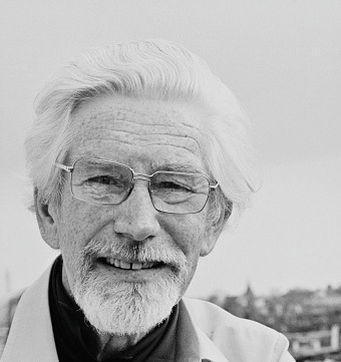
John Hillaby Reviews Jackdaw Cake (1985)
George Orwell says somewhere that autobiography is to be trusted only when it reveals something dreadful. Almost any sort of life when viewed from the inside consists largely of a series of defeats.
About the Author
John Hillaby (24 July 1917 – 10 October 1996) was a British travel writer and explorer. His real impact on the literary scene came in 1964, when he published Journey to the Jade Sea, an account of his 1,000-mile walk with a camel train through northern Kenya to Lake Turkana. The book set the pattern for his later books, Journey Through Britain (1968), an account of his walk from Land's End to John o' Groats, Journey Through Europe (1972) and Journey Through Love (1976). - The London Standard, Wednesday, October 9, 1985—21
Lewis gunner
By John Hillaby
George Orwell says somewhere that autobiography is to be trusted only when it reveals something dreadful. Almost any sort of life when viewed from the inside consists largely of a series of defeats.
By that tally alone, Norman Lewis’s book is a tremendous slice of grim-stuffed autobiography. If you didn’t know the author’s track record you might wonder how this gaunt, hawk-nosed slow-burn managed to overcome so much to become what he is today: a prince among travel writers dedicated to causes of injustice.
The title needn’t detain us. It’s very Welsh. It’s the bible thumpers’ repudiation of earthly lusts. But Mr Lewis, thank God, is very Welsh. And lusty, too, differing only from thousands of his fellow countrymen in being able to put his Celtic intuitions to unblinkered use.
Trance
Born in Enfield, he was shipped off to more than barmy relatives in Carmarthen to help him tide over Job-like succession of family tragedies. His own two brothers died rather dreadfully. His father an intelligent, likeable man ‘had the sight’. At most inappropriate times (such as his son’s wedding feast) he was apt to go into a trance to get spiritual messages from above or below.
In very Welsh-Wales “full of ugly chapels, of hidden money, psalm-singing and rain”, his randy grandfather “blooded” fighting cocks by inducing them to eat their own clipped-off head appendages. And he kept a parrot reduced to making small squeaky farts of protests.
Hideously scarred Aunt Polly, an epileptic, alternated between falling into the fire, the river or, once, from a window; and all Aunt Li could do was weep and pray. There were their seaside neighbours who stoned the poverty—stricken, holiday-making miners families, for poverty was the wages of sin, was it not?
Back in Enfield, Mr Lewis grew up; he raced old Bugattis and married the daughter of some eccentric Mafiosi before he started to tour the world on the trail of the oppressed from China to Brazil by way of Vietnam.
In North Yemen we have him awaiting the pleasure of the Imam Yahya. The delay had arisen because a prisoner awaiting public execution was reluctant to gratify His Majesty with the customary confession. It was brought about by tying up the man’s penis before they forced him to drink a great deal of water.
But it is as an Intelligence officer with the Allied forces in North Africa, Italy and, later, in Russia that the author’s terrible story achieves its delayed orgasm. What infamies were perpetrated there in the name of victory? He tells us, plainly.
The author’s style is very much his own: lilting Welshified English until the narrative is suddenly punctuated with Lewis gunning and lightly buried explosives. Lewisite, of course.

Martha Gellhorn on Naples '44
On an early Monday evening in November Norman and Lesley made a rare trip to London together. The occasion was a birthday party at the Groucho Club for Martha Gellhorn, a few month younger than Norman. Both were now eighty-five. Lesley recalls that the dinner was "fascinating. Her coterie of young men [was there], John Simpson, Jon Snow, Nicholas Shakespeare, John Hatt. It was predominately a male occasion." Gellhorn had been asked, as had Norman, by the Daily Mail to write a piece about her best of all time travel book for its New Year's Day edition, and told him she had chosen Naples '44.
From Semi-Invisible Man by Julian Evans:
On an early Monday evening in November Norman and Lesley made a rare trip to London together. The occasion was a birthday party at the Groucho Club for Martha Gellhorn, a few month younger than Norman. Both were now eighty-five. Lesley recalls that the dinner was "fascinating. Her coterie of young men [was there], John Simpson, Jon Snow, Nicholas Shakespeare, John Hatt. It was predominately a male occasion." Gellhorn had been asked, as had Norman, by the Daily Mail to write a piece about her best of all time travel book for its New Year's Day edition, and told him she had chosen Naples '44.
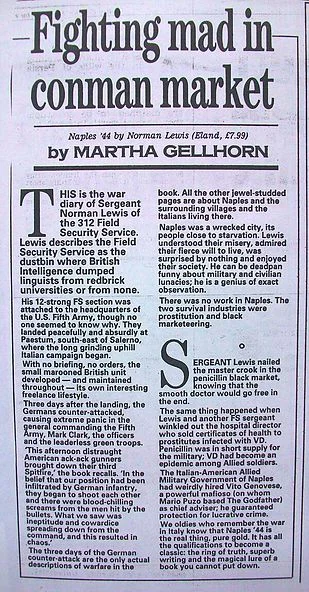
Fighting mad in conman market
Naples '44 by Norman Lewis (Eland, £7.99)
by MARTHA GELLHORN
THIS is the war diary of Sergeant Norman Lewis of the 312 Field Security Service. Lewis describes the Field Security Service as the dustbin where British Intelligence dumped linguists from redbrick universities or from none. His 12-strong FS section was attached to the headquarters of the U.S. Fifth Army, though no one seemed to know why. They landed peacefully and absurdly at Paestum, south-east of Salerno, where the long grinding uphill Italian campaign began.
With no briefing, no orders, the small marooned British unit developed—and maintained throughout—its own interesting freelance lifestyle.
Three days after the landing, the Germans counter-attacked, causing extreme panic in the general commanding the Fifth Army, Mark Clark, the officers and the leaderless green troops.
"This afternoon distraught American ack-ack gunners brought down their third Spitfire," the book recalls. "In the belief that our position had been infiltrated by German infantry, they began to shoot each other and there were blood-chilling screams from the men hit by the bullets. What we saw was ineptitude and cowardice spreading down from the command, and this resulted in chaos."
The three days of the German counter-attack are the only actual descriptions of warfare in the book. All the other jewel-studded pages are about Naples and the surrounding villages and the Italians living there.
Naples was a wrecked city, its people close to starvation. Lewis understood their misery, admired their fierce will to live, was surprised by nothing and enjoyed their society. He can be deadpan funny about military and civilian lunacies; he is a genius of exact observation.
There was no work in Naples. The two survival industries were prostitution and black marketeering.
***
SERGEANT Norman Lewis nailed the master crook in the penicillin black market, knowing that the smooth doctor would go free in the end. The same thing happened when Lewis and another FS sergeant winkled out the hospital director who sold certificates of health to prostitutes infected with VD. Penicillin was in short supply for the military; VD had become an epidemic among Allied soldiers.
The Italian-American Allied Military Government of Naples had weirdly hired Vito Genovese, a powerful Mafioso (on whom Mario Puzo based The Godfather) as chief adviser; he guaranteed protection for lucrative crime.
We oldies who remember the war in Italy know that Naples '44 is the real thing, pure gold. It has all the qualifications to become a classic: the ring of truth, superb writing and the magical lure of a book you cannot put down.
Originally published in The Daily Mail, circa 1995

Anthony Burgess Reviews Empire of the East (1993)
'Empire' is undoubtedly the right technical term for a mass of sea-sundered territories ruled from a single centre. When I lived in Malaysia I was aware of Sumatra a few sea miles to the west; when I was in Brunei (which on Norman Lewis's map has, with Sabah, been swallowed by Sarawak) I was to the north of an unexplored mass of jungle that belonged to Indonesia.
Taken from The Observer: 17.10.93
Fruit bats, blood soup
'Empire' is undoubtedly the right technical term for a mass of sea-sundered territories ruled from a single centre. When I lived in Malaysia I was aware of Sumatra a few sea miles to the west; when I was in Brunei (which on Norman Lewis's map has, with Sabah, been swallowed by Sarawak) I was to the north of an unexplored mass of jungle that belonged to Indonesia.
Indonesia was welcome to it. Indonesia was a mess and still is—sloppily or tyrannically ruled from Jakarta, way down south in Java; not better governed by the Dutch than by the men of Malay stock who took over. What Jakarta did with Washington's approval to East Timor (curious tautology—Timor means East), remembered in Lewis's fine book, goes well with the atrocities of Pol Pot. Hitler and Stalin might well have looked up from hell with approval at President Suharto.
The doyen of English travel writers, Lewis must now be pretty old. It was courageous of him to make the trips he did— through Sumatra, East Timor and Irian Jaya—the most eastward of the Indonesian territories (600 miles south you touch Australia). The danger is to be found less in the people you meet than in the food they offer and the karaoke they deafen with. Lewis's daughter Claudia, having been at work on a project with homeless Javanese, had just been in Sumba eating blood soup with pig fat. Fruit bats were much cooked in Sumatra. The Tropicana, a much-praised Chinese restaurant in Banda, served pig's stomach stewed in blood, and pork in snake's gall. 'You go for alligator? Shit, we got everything.'
Lewis motored, with his son and son's friend and an obligatory guide, up to Banda Aceh in the Sumatran north. This used to be Acheh, but reformed Bahasa spelling forced you (in theory at least) to drink Chocha Chola. The philology of the Orient is as shaky as its anthropology. But Indonesia has not gone as far as Malaysia in wishing its aboriginals to be kicked into Islam. A lot of Indonesians wish to cut Muslim throats because of a Muslim habit of micturating in streams and rivers and annoying the water gods. And what can decent rational Muslims do with a land where every movement may be defilement of a taboo?
Jakarta reason has devastated the rain forests on a Brazilian scale, killing off a uniquely rich wildlife. As for the waste land, that can become Japanese golf courses. And in a new paradise in which an excess of native cultures will be reduced to tourist pokerwork, the whole empire can become an under-paid, overworked labour force.
Getting to East Timor was difficult. No seats today or tomorrow and the waiting list is full. It seemed that there was some dirty secret to hide. Police scrutiny was in tense and there was a powerful military presence. The filth went back to 1975, when, after a meeting in Jakarta between Suharto, President Ford and Henry Kissinger, which the State Department called 'The Big Wink', Indonesia invaded the Portuguese territory of East Timor. The slaughter of probably a million Timorese, on the grounds that they were communists, still seems incredible.
Lewis's Portuguese was better than his Bahasa, but it was a dangerous language to use. Picking up the keys to his room, he let the word obrigado slip out. This nearly caused a riot. Only his taxi driver had the guts to cry 'Vivan os cornpanheiros!'.
His journey to Irian Jaya was less perilous, although his missionary pilot told him that there were probably still cannibals in the district. Lewis visited a Yali tribal community living in a stone age culture some ten thousand years old. The men were naked except for a penis gourd. Their solemn greeting was 'I honour your faeces'. There is a curious analogy here with the Malaysian protocol of addressing the dust under the Sultan's feet. Everybody coughed, and life was a bore mitigated by the weekly church service.
The Yali could not be expected to join in one of the most incredible feats of mining ever seen—the Ertzberg mountains in the highlands of Irian Jaya have been found to contain a body of copper, silver and gold that continues to be removed at the rate of 24,700 tonnes a day. Meanwhile, the native population have been forced to surrender 10,000 hectares of their land for which no compensation has been paid. And yet the Indonesian Constitution guarantees that' the earth, the waters, along with the natural resources contained therein, shall be regulated by the government, and are to be used to promote the utmost welfare of the people’.
Whatever government Indonesia has had, it has always been corrupt, cruel and mendacious. Mr Lewis has, with his inveterate skill, presented these purgatories with a light touch. His prose is almost edible. In old age he is writing better than ever.
View scan

Book Review: A View of the World
A Dragon Apparent and Golden Earth established Norman Lewis as a writer of uncommonly well-written prose, who, as Cyril Connolly noted, had a remarkable gift for making even a lorry seem interesting. Both books, published in impressively short succession, were lavished with superlatives from the critics of the time . . .
A Dragon Apparent and Golden Earth established Norman Lewis as a writer of uncommonly well-written prose, who, as Cyril Connolly noted, had a remarkable gift for making even a lorry seem interesting. Both books, published in impressively short succession, were lavished with superlatives from the critics of the time. Yet neither sold especially well, and Lewis’s next few travel books followed with surprising infrequency. He completed one more in the 1950s (a collection of essays), then just two others throughout the 1960s and ‘70s, when much of his creative energy was invested in the writing of his far more lucrative novels.
Travelling the world nevertheless remained Lewis’s first priority, and he frequently wrote short accounts of his numerous trips for newspapers and magazines. In 1968, he wrote what he considered the greatest of all his endeavours: the essay “Genocide in Brazil”, about the atrocities committed against Brazilian natives by the country’s own Indian protection service. This, along with several other essays, was later included in the collection A View of the World, an astonishing work that confirms Graham Greene’s belief that Lewis was one of the best writers of the twentieth century.
When Eland Books published it in 1986, Lewis was in a new stage of his career. He had quite recently written several of his finest books, and John Hatt, the man behind Eland, had been successful in renewing attention in Lewis’s older ones. A View of the World was thus perfect for readers wishing to discover more; it was a book to dip in and out of, a work of tremendous variety, not only in terms of location, but in its vast emotional depth. Throughout it, Lewis writes of repatriating Cossacks to the Soviet Union; of the idyllic pleasures of Belize; of the ferocious blood feuds of Sardinian bandits. And his evocative descriptions of these events are nothing less than exceptional.
When readers hear the term travel journalism, they might think of the sort of articles found in Sunday newspaper supplements: those in which the writer endeavours to describe wherever it is he’s staying by using words like “sun-kissed” and “wind-swept”, while at the same time lamenting how rude the staff in his hotel were. A View of the World is nothing like this. As one review put it: Lewis “makes all other travel-writing read like the blurb on a brochure,” and to a great extent this is true. Lewis was out of place even among his contemporaries—Patrick Leigh Fermor, Eric Newby, Peter Fleming—all of whom wrote extraordinary travel books, though none quite like Naples ’44, Golden Earth or A Dragon Apparent.
Likewise, only Lewis could have written the essays collected in A View of the World. Everything that makes a good Norman Lewis book is here: his persistent use of understatement, his powerful descriptions; he even touches upon several tried and tested themes, such as in his account of a small a fishing community in unspoilt Ibiza, similar in many ways to his description of the semi-fictional Farol in Voices of the Old Sea. Yet Lewis never seems to repeat himself, even when writing of the same place twice, which he does so a number of times throughout the book.
In another essay on Ibiza Lewis explains how the mistreatment of an Ibicene hound sparks a debate of ethics among the locals of the town; and in two separate essays on Cuba, we hear of Lewis’s fascinating encounters with Ernest Hemingway, Castro’s executioner, Ian Fleming, and Ed Scott, Fleming’s priapic model for James Bond. In Hemingway, Lewis finds a man of great sadness, who, only a few years after winning the Nobel Prize for literature, has taken to drowning his tribulations with half-pints of Dubonnet. “He told me nothing,” writes Lewis, who finds the whole ordeal deeply tragic, “but taught me more than I wanted to know.”
Elsewhere, Lewis is not always quite so willing to put his opinion forward to the reader. One of his strengths as a writer was his ability to not let his fervency spoil his prose. He allowed his reader to form an opinion based on what he put down on the page, rarely interjecting to impose his thoughts or feelings on a matter. This effortlessly detached style is perfect exemplified in the aforementioned “Genocide in Brazil”, compiled here under the title of “Genocide”, which is not merely the standout article of the collection, but surely one of the greatest pieces of journalism of the 20th century. It was greeted with such outcry when it was first published that it led to the creation of Survival International, a charity concerned with the protection of indigenous peoples around the world. And even all these years later the essay’s power to shock and disturb remains undiminished.
Few essays in the collection are quite so poignant. Most conjure very different emotions in the reader. Variety is one of the great pleasures of A View of the World; it’s what makes it such an ideal bedside companion, a book that the reader can pick up at any time and find a piece to suit his mood. It is sometimes humorous, always insightful and occasionally utterly harrowing; yet whatever tone Lewis is using, he is never prosaic. His enthusiasm and finely crafted prose radiate from every page. These are the writings of a man who genuinely loved to travel, and who could keep an open mind even when presented with sheer deprivation.
Almost all of Lewis’s travel books are worth owning. But this is the one that readers should carry in their rucksacks when they themselves travel, to remove during a quiet moment, so that they can enjoy the fabulous writings of a man who gave so much of his life to touring the world.
By Jack Sharp. Reproduced from nosoapradiopolka.co.uk
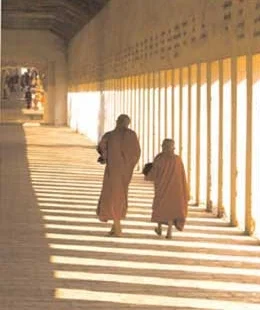
Book Review: Golden Earth
For many of its practitioners, travel writing is entirely a romantic venture by which the writer imagines himself as the hero of his own account, tramping his way through uncharted sands like Lawrence of Arabia. A more modest writer might see things less conceitedly and make himself the fool instead; but surely only a truly self-effacing one could resist the temptation of making himself the central character in his own travel book . . .
For many of its practitioners, travel writing is entirely a romantic venture by which the writer imagines himself as the hero of his own account, tramping his way through uncharted sands like Lawrence of Arabia. A more modest writer might see things less conceitedly and make himself the fool instead; but surely only a truly self-effacing one could resist the temptation of making himself the central character in his own travel book.
One such writer was the late Norman Lewis, a prolific traveller whose ego rarely made an appearance in any of his works. He once described himself as a semi-invisible man, a writer of “revealing little descriptions” who, in words that were always well considered, got to the heart of a place by examining its history and its people. In particular, he was interested in the indigenous people he met in the many countries he visited, those whose entire existence was—and in many cases still is—threatened by our ever-changing world.
Lewis had an exceptional gift for capturing the atmosphere of a country on the cusp of social or political change. In A Dragon Apparent (1951), about his travels in what was known then as Indo-China, he writes of Vietnam during a period of violent transition; and in Golden Earth (1952) details a war-stricken Burma that is already starting to develop in a most severe and baleful way. These books would likely have been considered classics even if Burma and Vietnam had changed little in the years following their publication. But it is true that they are made all the more interesting in light of the Vietnam War and Burma’s military junta.
Golden Earth is the lesser known of the two: surprisingly little appears to have been written about it online, as manifestly brilliant as it is. It opens memorably on a surge of description, with “Burma spread as a dark stain into the midnight sea,” and a “moonlight too weak” to reveal fully a breath-taking spectacle of golden pagodas. Yet by the very next page Lewis has shifted moods entirely, and is now explaining how, through “a slow process of compression and corruption”, officials handling his travel documents have managed to confuse his name with Thirty Bedford Square, the address of his publisher. Thus for the rest of his trip he is known as “Monsieur Thirsty Bedford”.
Lewis had a sense of humour like no other travel writer. His works were often funny, though rarely did he crack wise. His wit instead came from his remarkable ability to deconstruct the absurd using his typically dry, detached style. At his funniest, his prose read like that of S.J. Perelman, a writer Lewis admired and later befriended. But unlike Perelman, Lewis was never intent on merely making his reader laugh. In fact, often the most humorous parts of his books were also the most revealing. A perfect example of this can be found in the first half of Golden Earth, where Lewis describes his ordeal of eating a meal by which “all European prejudices about food had to be abandoned”.
Lewis dines in what he calls “a murky grotto” in which a cook stands, naked to the waist, with “a snippet” of intestine dangling from his finger. A lesser writer might have had his fun with this image and moved on, but here Lewis takes the opportunity to make fun of himself too, and later, after conceding to try the dish, is impressed to find that it is surprisingly edible. This is typically open-minded of Lewis, who never let a bad experience tarnish his image of a country or its people. A few pages later, he is trying to sleep and is startled by something he “half-dreamed half-thought” climbing up the leg of his camp bed. He soon discovers that he is sharing the bed with a scorpion, but again, resists the urge to grouse.
Of course, the reader understands why Lewis is reluctant to complain: compared to the people that Lewis writes about, his grievances seem inconsequential. Within the very first few pages of Golden Earth we hear how pirates have held up a ferryboat and killed three members of the crew, and similar incidents have become almost a daily occurrence. The Burma portrayed throughout the book is one of fear and unrest, where insurgents and warlords are commonplace, and the country’s post-colonial government can do little to stop them. Yet aside from this, Lewis is overwhelmed equally by the country’s breath-taking natural beauty and the kind generosity of the Burmese.
Their standard of living has been better in the past—this is a practically undisputed fact—but Lewis wants to know specifically if things were better in the days of British rule. Apparently it is commonly agreed: “Better?” they say. “Why even bring it up? Everyone was well off then.” British rule, we’re told, brought several enduring changes to Burma that completely transformed its once-agrarian society. Up until that point, kings had ruled the country, perhaps the most infamous of which being King Mindon Min. He is remembered largely for his attempts to modernise his kingdom, for his sheer brutality, and for his great many children, of which seventy were of royal birth.
Hsinbyumashin, one of his queens, dominated the last days of Mindon’s rule, and ordered that almost all possible heirs to the throne be killed, so that her daughter Supayalat and son-in-law Thibaw would become queen and king. What ensued was a long and brutal ceremony in which the siblings were placed in red velvet sacks and respectfully beaten to death in a festival lasting six days. “Clearing” is the word Lewis uses to describe the massacre, “cleared” being the current Burmese euphemism for such planned killings. As for the sacks—no doubt the reader has already guessed why these were made of red velvet: it was to “camouflage any unseemly effusion of royal blood”.
A great admirer of Herodotus, Lewis was a historian at heart, though he was also too gifted in other ways to be confined to that title. His accounts, as bold and brimming with description as they were, rarely took the form of step-by-step reportage. When Lewis did adopt the familiar style of most travel writers, he did so only briefly, and never to give the reader a greater impression of himself. The place and its people were always his priority; he was only ever a casual observer, a chronicler of the exotic, whose job it was to inform and entertain the reader, never to impose his personality upon them.
By revealing so little about himself, Lewis was able to say more about his subject and fill his accounts with more “revealing little descriptions”. Golden Earth paints a fascinating portrait of Burma at a notably turbulent time, and yet Lewis doesn’t stop there. As he reels through a substantial portion of its history, he also attempts to offer the reader an idea of how the average Burmese behaves and thinks. We are told that they are not a resentful people; they are, as a whole, accepting of Westerners, and their hospitality is sometimes so great that it borders on embarrassing. Lewis is treated like an old friend wherever he goes and with whomever he speaks, and frequently feels bad for taking so much in exchange for so little.
We learn, too, (though Lewis himself has his doubts) how the women of Burma enjoy “absolute equality” to men, and that long extracts from the ancient Laws of Manu can be quoted in support of this contention. Buddhism is the country’s main religion, and at first the Burmese can seem rather pious. But as Lewis explains, 1950s Burma is more modern than it at first seems. It is surprisingly British in some respects too, and Lewis does not find it especially strange when he encounters a man enjoying a Penguin D.H. Lawrence, or a Director of Prisons who quotes Chaucer. He is, however, amused to meet a restaurant owner who is eager to serve him egg and chips, despite Lewis’s insistence that he’d much rather try something more exotic.
Lewis seems genuinely beguiled by Burma. Looking beyond the fighting and unrest, he gathers a sense of what it is truly about, and fancies it a land where “the condition of the soul replaces that of the stock market as a topic of polite conversation”. Burma’s obvious political problems aside, he believes that it is a most exceptional country, better in many ways to our own: it is fertile, reasonably populated, and free from the damaging myths of colour, race or caste. “All that is necessary,” he concludes, “is to cure the people of their infantile craving for trash from overseas,” for unnecessary consumption has no place in Burmese life.
As for Burma’s communist incursions: Lewis predicts an incurable dictatorship that will lead to civil war. But never in the pages of Golden Earth does Lewis sound terribly pessimistic. He was an optimist in many ways, and this quality is the golden thread that can be found in all of his travel books. While he may have been interested highlighting man’s darkest propensities, he seemed to believe equally that man has the ability to do good. Otherwise he wouldn’t have written so fondly of the great many countries he visited. Lewis certainly saw plenty of good in the Burmese he met, and this mesmerising account is teeming with the same exuberance and compassion that he claimed to have witnessed on this unforgettable trip.
By Jack Sharp. Reproduced from nosoapradiopolka.co.uk